crate training made easy

Crate Training Made Easy

Email
Print
Facebook
crate training made easy

Table of Contents

Crate Training Made Easy

Bringing a new puppy home is an exciting adventure, but it can also come with its share of challenges. One of the most effective tools for a smooth transition and a well-behaved companion is crate training made easy. Imagine a calm, confident puppy who feels secure in their own space, making potty training a breeze and preventing destructive behaviors. This isn’t just a dream; it’s an achievable reality for every puppy owner.

Why Crate Training is Important for Your Puppy's Well-being
crate training made easy
Understanding why crate training is important is the first step toward success. A crate isn’t a cage; it’s a safe, personal den that mimics a dog’s natural instinct to seek shelter. This secure space provides comfort and reduces anxiety, especially during times of stress or when you’re away.
 
Beyond emotional security, a crate is an invaluable aid in house-training. Dogs instinctively avoid pottying their sleeping areas, making the crate a powerful tool for crate training potty training. It establishes a routine and teaches your puppy bladder control, significantly speeding up the house-training process.

Getting Started: Easy Crate Training for Puppies

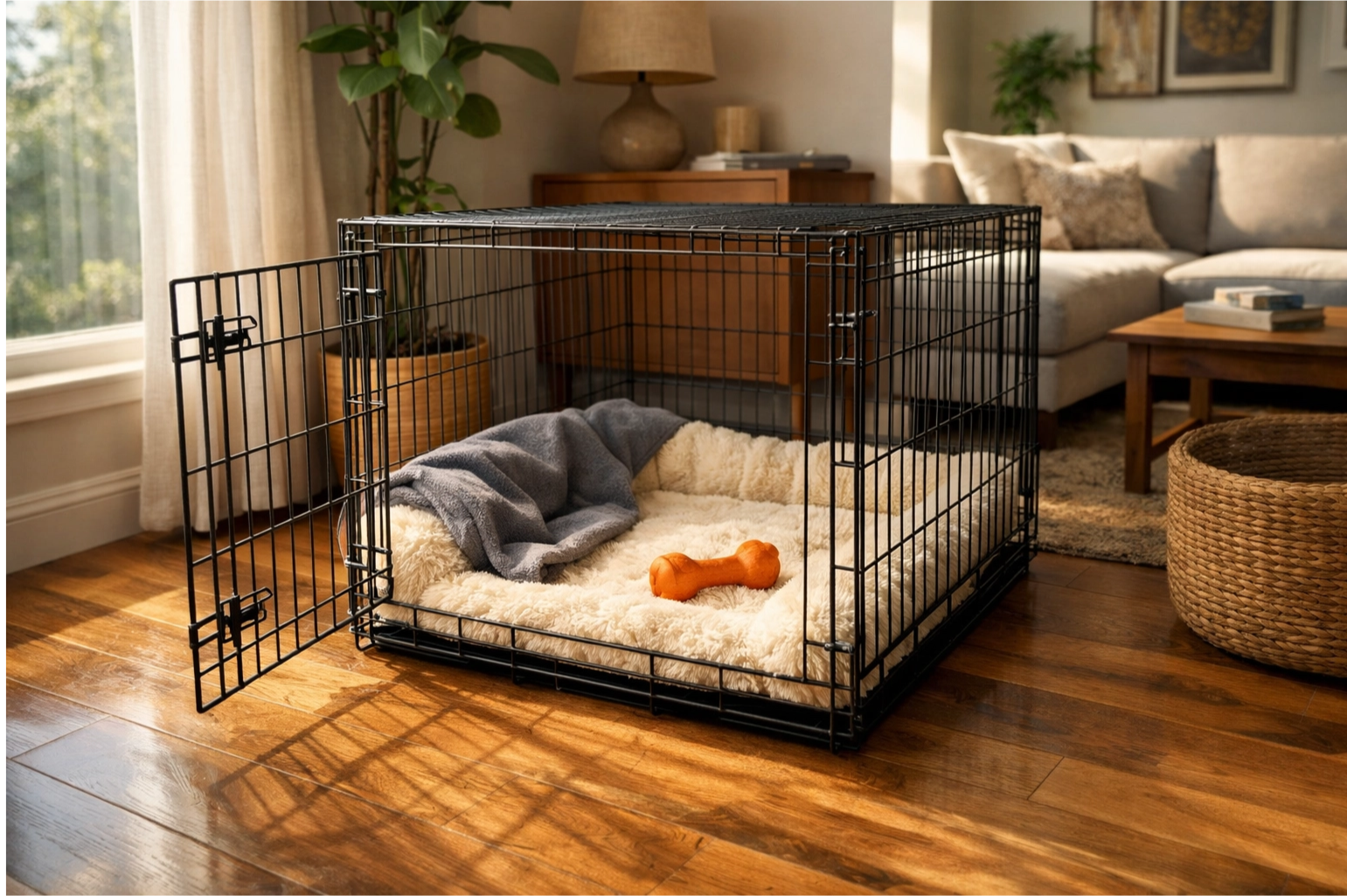
Starting your puppy’s crate journey on the right paw is crucial for easy crate training for puppies. The goal is to create a positive association with the crate from day one. Begin by choosing the right size crate—one that allows your puppy to stand up, turn around, and lie down comfortably, but isn’t so large that they can use one end as a bathroom.
 
Introduce the crate gradually, making it an inviting space. Place soft bedding, a favorite toy, and even a treat inside. Leave the door open and let your puppy explore at their own pace, never forcing them in. Positive reinforcement with praise and small treats will build a happy connection with their new den.

Building Positive Associations: Meals and Short Stays
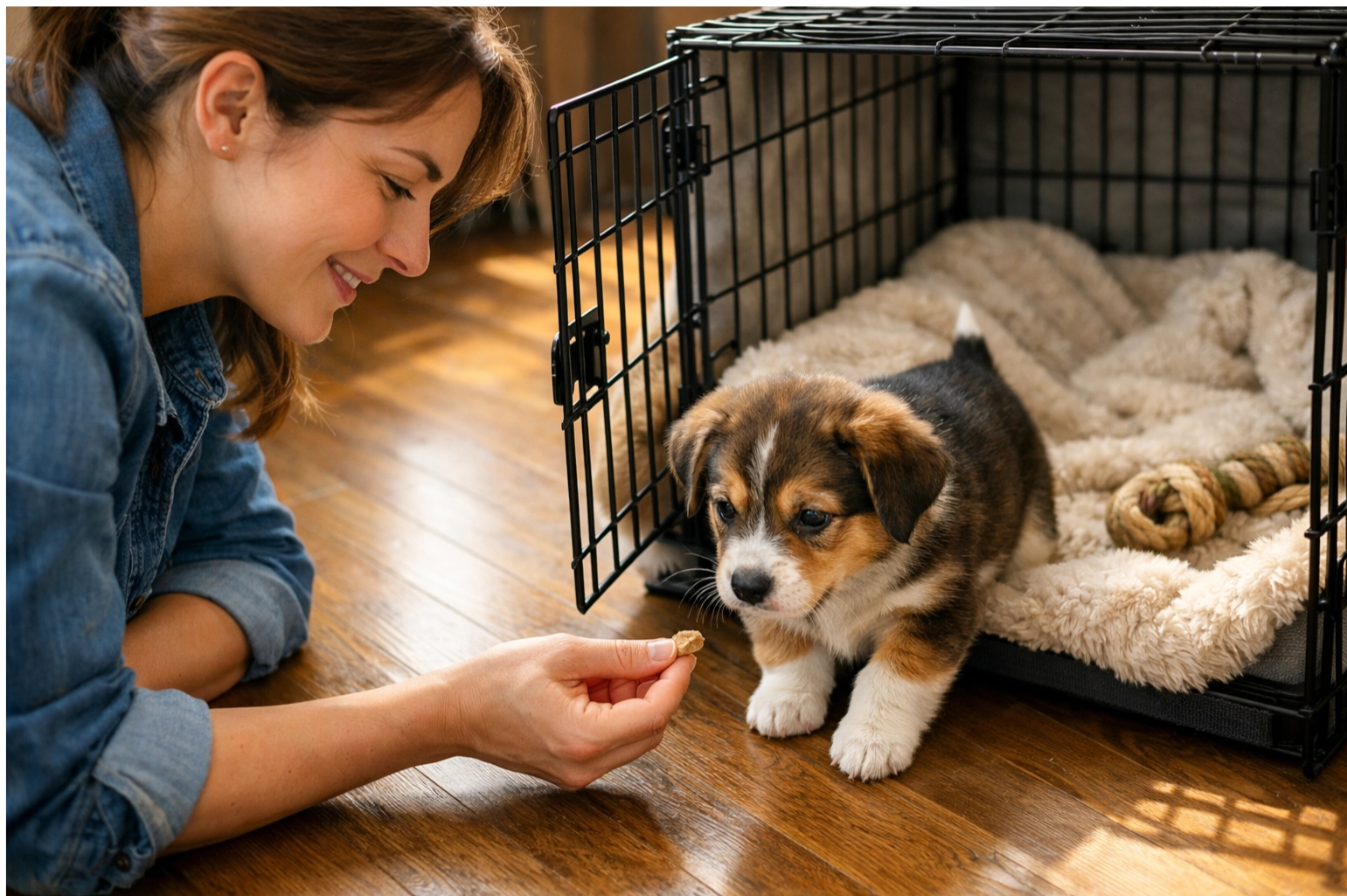
Feeding your puppy meals inside the crate is an excellent way to foster positive feelings. Start by placing the food bowl just inside the door, then gradually move it further back as your puppy becomes more comfortable. This routine helps them associate the crate with pleasant experiences.
 
Once your puppy is eating comfortably in the crate, begin practicing short stays. Close the door for a few seconds while they’re eating, then open it before they finish. Gradually increase the duration, always returning before they show signs of distress. Consistency and patience are key during this stage.
 
Feeling overwhelmed by the nuances of puppy training? The virtual dog trainer offers personalized guidance to help you navigate these early stages with confidence. Discover how simple it can be to build a strong, positive relationship with your new companion.
Crate Training Made Easy

Crate Training and Potty Training: A Powerful Duo

The synergy between crate training and potty training cannot be overstated. A properly sized crate helps your puppy learn to hold their bladder, as they won’t want to potty their sleeping area. This natural inclination is your biggest ally in preventing accidents.
 
Establish a consistent schedule: immediately take your puppy outside for a potty break after waking up, after eating, and after being released from the crate. Reward successful outdoor potty breaks with enthusiastic praise and treats. If your puppy has an accident in the house, clean it thoroughly without scolding, and reinforce the outdoor routine.

Troubleshooting Common Crate Training Challenges

It’s normal to encounter a few bumps along the crate training made easy road. If your puppy whines or barks in the crate, it’s important to distinguish between needing a potty break and simply wanting attention. If you’ve just taken them out, wait for a moment of quiet before opening the crate door. Opening it while they’re crying teaches them that whining gets results.
 
Never use the crate as a punishment. This will create negative associations and fear, undermining all your positive efforts. The crate should always be a safe haven, not a place of dread. If your puppy is struggling with separation anxiety, consult with a professional trainer for tailored advice.

Want Help Training Your Dog?
Schedule your free consultation

People Also Ask: Your Crate Training Questions Answered

What is the 10-minute rule for crate training?

With each successive feeding, leave your puppy enclosed in the crate for a few minutes longer, aiming for about 10 minutes after they finish eating. If they start to whine, you might be increasing the time too quickly; adjust accordingly.

How long can a puppy stay in a crate?

Generally, a puppy can stay in a crate for one hour per month of age. For example, a three-month-old puppy can typically stay in a crate for about three hours. Puppies under six months should not be crated for more than 3-4 hours at a time.

Why is crate training important for puppies?

Crate training is important because it provides a safe, secure den for your puppy, aids significantly in potty training by leveraging their natural instinct not to potty their sleeping area, and helps prevent destructive behaviors when unsupervised.

What are common mistakes to avoid in crate training?

Common mistakes include using the crate for punishment, leaving your puppy in the crate for too long, placing absorbent pads inside the crate (which can encourage accidents), and forcing a panicking puppy into the crate.

Do and don'ts of crate training?

Do:

  • Make the crate comfortable and inviting
  • Reward your dog
  • Feed meals inside
  • Give self entertainment toys


Don’t:

  • Use the crate as punishment
  • Leave your puppy in for excessive periods
  • Open the door when they are whining for attention.

Where should I place my puppy's crate?

At night, place the crate in your bedroom so your puppy can hear and smell you, which provides comfort. During the day, position it in a low-traffic corner of a commonly used room, like the living room, to make the trip from the crate to where you want your puppy to go potty as short as possible.

How do I crate train my puppy for potty training near me?

Start by ensuring the crate is the correct size. Immediately take your puppy outside to their designated potty spot after waking up and after being released from the crate. Reward successful outdoor potty breaks. For local guidance, consider reaching out to a professional dog trainer in your area.

What if my puppy cries in the crate at night near me?

If your puppy cries at night, first rule out the need for a potty break by taking them out quietly. If they don’t need to go, return them to the crate. Ignore attention-seeking whining, as responding teaches them that crying works. You can also try covering the crate to make it feel more secure.

Your Journey to a Happier Home Starts Here

Mastering crate training made easy is one of the most rewarding investments you can make in your puppy’s future and your household’s harmony. It’s a foundation for good behavior, independence, and a strong bond built on trust and security. With patience, consistency, and the right approach, you’ll soon have a puppy who loves their crate and a home that’s much calmer.
 
Ready to transform your puppy’s training experience? Contact The virtual dog trainer today for expert, personalized support. Call us at 347-921-3376 to schedule a consultation and embark on a journey to a well-behaved, happy companion. and confident companion. Your perfect puppy partnership awaits!
 

Want help training your dog? click here to schedule your free virtual consultation today