

how to introduce dogs when one is aggressive
If you’re wondering how to introduce dogs when one is aggressive, the good news is this: fights are preventable when you slow the process down and control the environment from the start. The first meeting can shape whether these dogs become calm housemates or lifelong stress triggers, so the safest approach is neutral space, distance, and zero pressure.
Aggression is often fear, frustration, or territorial stress. That means the goal is not forcing interaction. The goal is helping both dogs feel safe enough to stay calm.
What’s the safest way to start the first meeting?
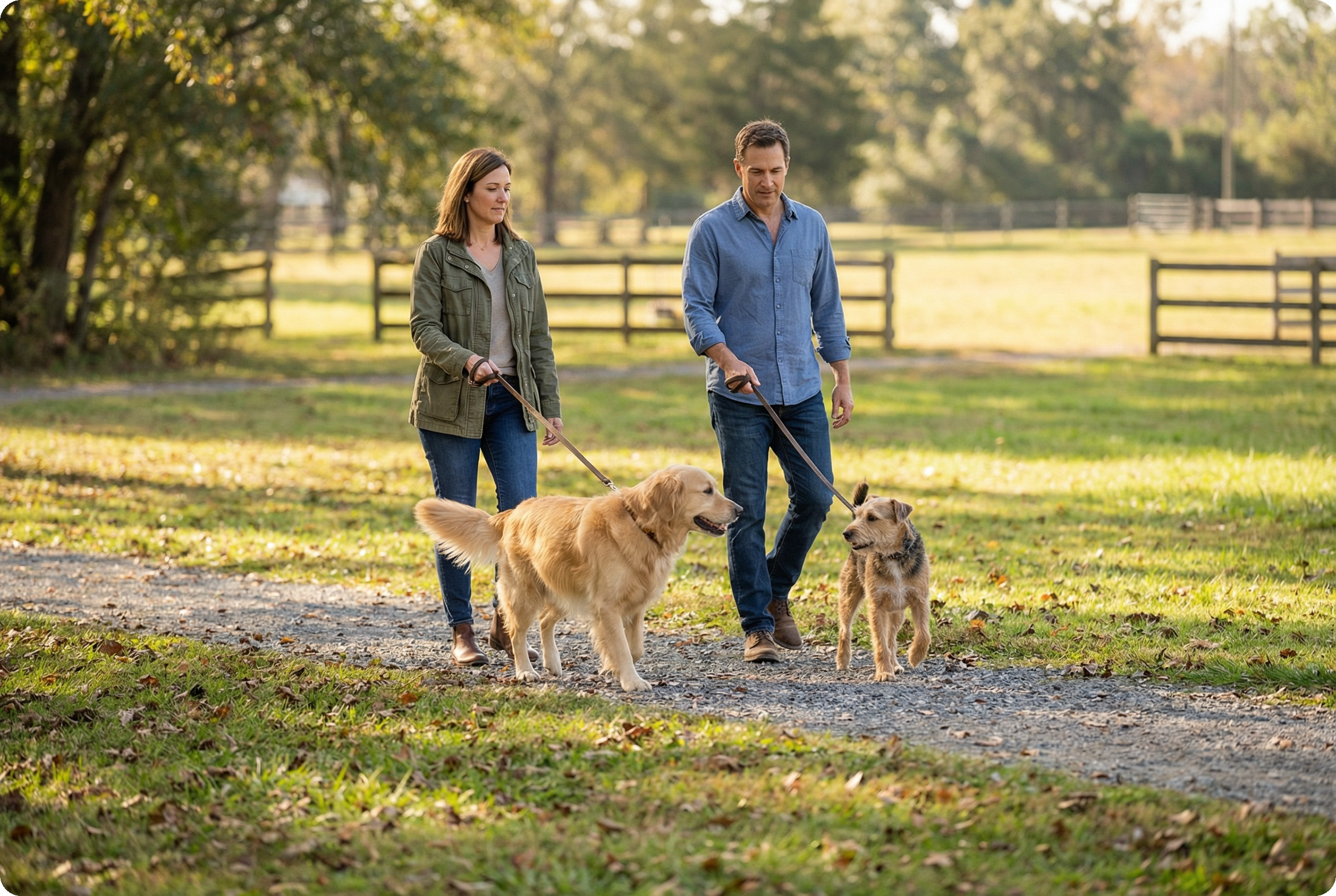
The safest first step is a parallel walk in neutral territory. This is the best answer for dog owners asking how to introduce dogs when one is reactive because movement lowers pressure and keeps greetings from becoming confrontational.
Start with both dogs 15–20 feet apart. Walk in the same direction, rewarding calm check-ins, soft body language, and disengagement from the other dog.
Avoid face-to-face leash greetings right away. Direct frontal pressure is one of the fastest ways to trigger barking, lunging, or a fight.
How long should aggressive dog introductions take?
Aggressive dog introductions should take as long as the dogs need to stay relaxed—often several short sessions over days or weeks. If either dog becomes stiff, hard-eyed, vocal, or fixated, increase distance and slow the process down.
How to introduce aggressive dogs to each other step by step
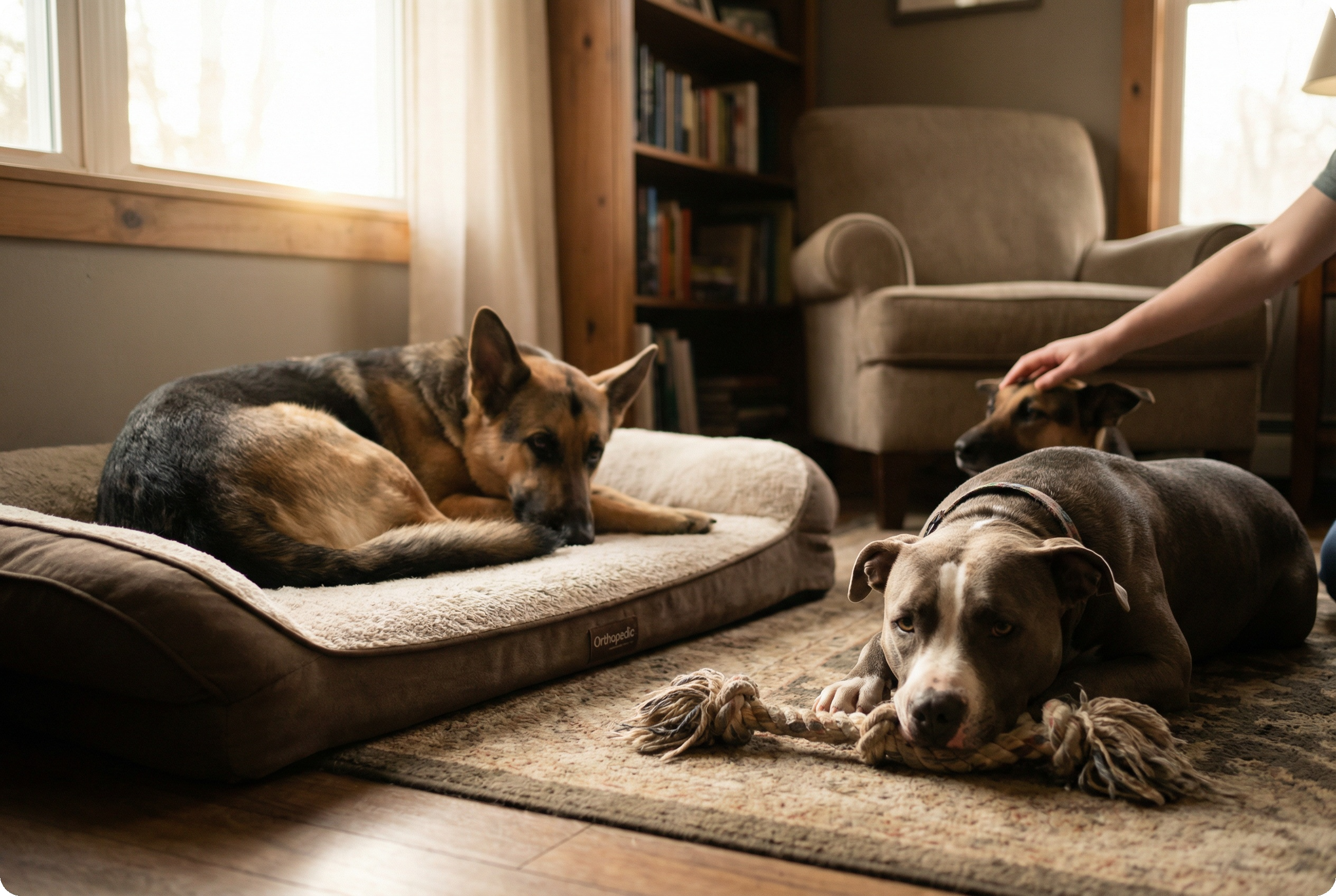
Here’s the safest progression for how to introduce aggressive dogs to each other:
- Meet on neutral ground
Use a quiet sidewalk, park edge, or open field where neither dog feels ownership. - Start with parallel movement
Walk the dogs in the same direction without forcing sniffing. - Reward calm behavior
Mark loose body language, looking away, sniffing the ground, and choosing calm. - Close distance gradually
Only shorten the gap if both dogs remain soft and relaxed. - Use short sniff breaks
Quick 1–2 second sniffing arcs, then cheerfully move apart. - End early while it’s going well
Don’t wait for tension. Stop on success.
This slow structure helps reactive dogs build positive associations instead of rehearsing explosions.
What if one dog is territorial at home?
If you need to know how to introduce dogs when one is territorial, never make the first meeting inside the house.
Start outdoors first, then walk both dogs into the home together after exercise. This reduces “intruder in my space” emotions and lowers guarding tendencies.
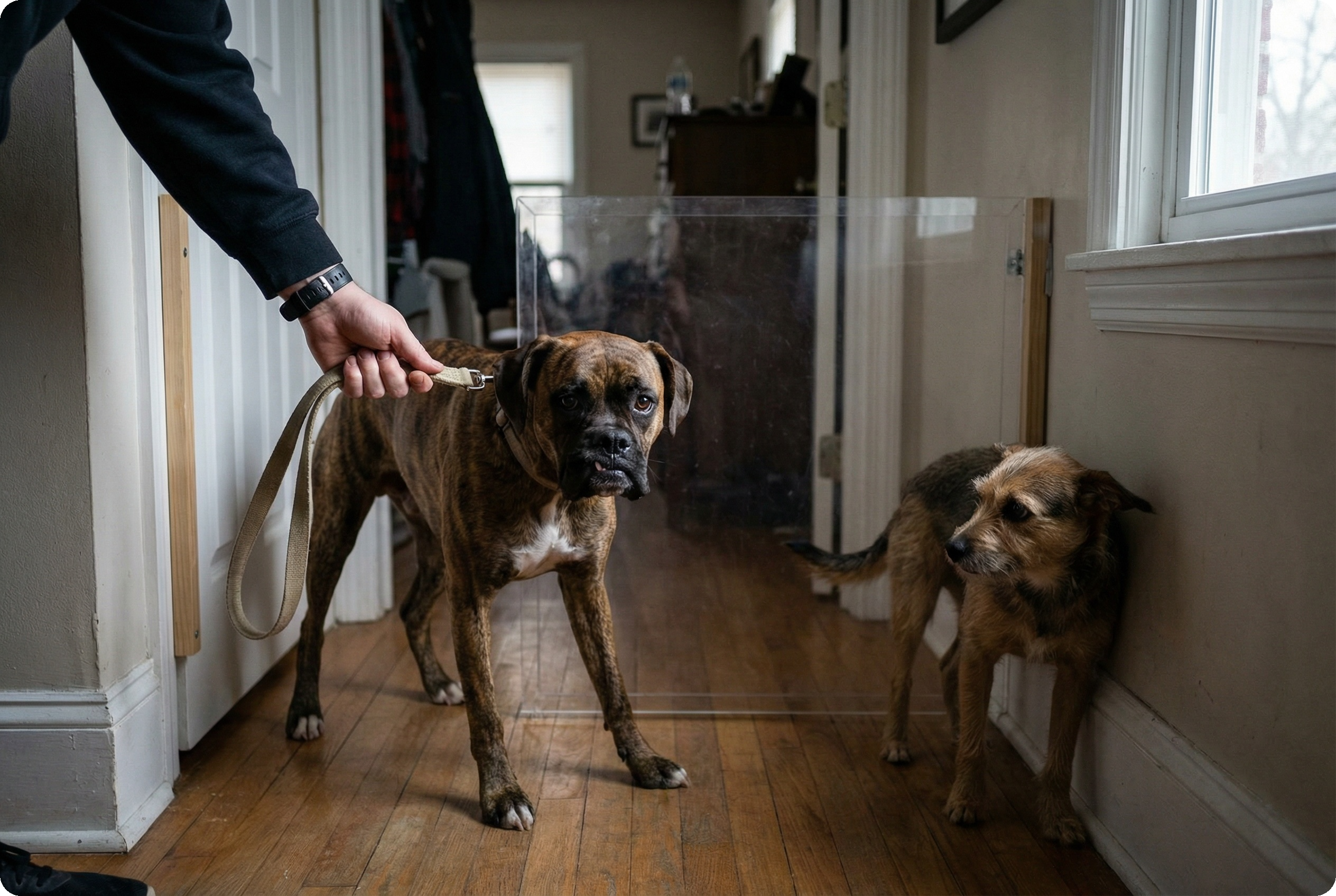
Inside, remove toys, food bowls, bones, beds, and favorite resting spots. Territorial conflict often starts around resources, not the dogs themselves.
What body language means stop immediately?
The biggest mistakes happen when owners wait too long.
Stop and create distance if you notice:
- freezing
- hard staring
- stiff tail
- lip lifting
- low growls
- slow stalking movement
- pinning another dog in space
These signs usually come before the lunge. Catching them early changes everything.
Can reactive dogs ever become friends?
Yes—many can.
Dogs that seem “aggressive” are often overstimulated, fearful, or leash-frustrated. With controlled repetitions, enough distance, and positive reinforcement, many dogs learn neutrality and eventually play or coexist peacefully.
The real win is calm coexistence, not forced friendship.
Common mistakes that make introductions worse
Dog owners often accidentally speed this up.
Avoid:
- nose-to-nose greetings
- tight leash tension
- meeting indoors first
- hovering over the dogs
- correcting barking harshly
- introducing around toys or food
Next step if you want help
If your dog’s reactions feel unpredictable, this is where expert coaching changes the outcome fast. The virtual dog trainer can help you map the exact distance, pacing, and reward timing your dog needs—without pressure and without guesswork.
People Also Ask
How do I introduce my aggressive dog to a new dog?
Start with a parallel walk in neutral territory. Keep space between them and reward calm behavior before allowing short sniff breaks.
How do you introduce dogs when one is reactive?
Walk them in the same direction at a safe distance. Let the reactive dog notice the other dog without pressure, then reward calm choices.
How to introduce dogs when one is territorial?
Meet outside first, then enter the home together after exercise. Remove toys, beds, and food during the first few indoor sessions.
Should aggressive dogs meet on leash?
Yes, but only when your dog is ready and not fixating or showing any warning body language signs. Be sure to keep the leash loose and use movement instead of stationary greetings. Tight leashes can increase reactivity.
How long does it take for dogs to accept each other?
It depends on the dogs. Some need one session, while reactive or fearful dogs may need several days or weeks.
Can two aggressive dogs live together?
Sometimes, yes—with structure. In more serious cases, management systems and supervision will be necessary.
Who helps introduce aggressive dogs near me?
A qualified behavior-focused trainer can help. If you want remote support that works anywhere near me, The virtual dog trainer is a strong next step.
Can I find help introducing territorial dogs near me?
Yes. Search for dog reactivity or aggression specialists near me, or work virtually if you need faster scheduling and customized coaching.
Final thoughts: calm introductions create long-term peace
The secret to how to introduce dogs when one is aggressive is simple: distance, movement, structure, and patience. The more you remove pressure, the more likely the dogs are to relax and build safe associations.
If your dog is reactive, territorial, or has already had a bad first meeting, don’t leave the next attempt to chance. Call The virtual dog trainer at 347-921-3376 and get a clear, confident plan that helps your dogs succeed safely.
Want help training your dog? click here to schedule your free virtual consultation today