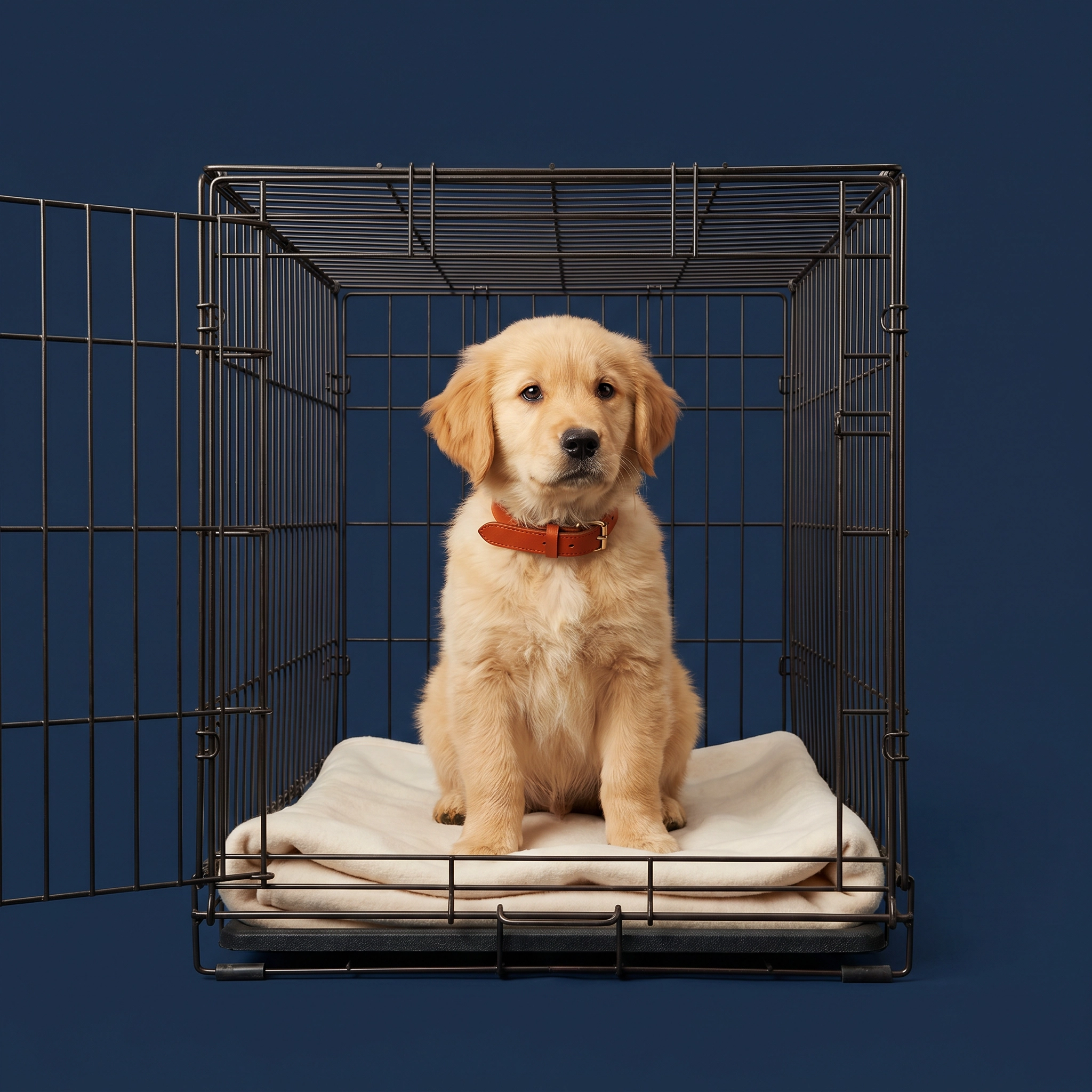
puppy crate training schedule

The Ultimate Puppy Crate Training Schedule

Email
Print
Facebook
puppy crate training schedule

Table of Contents

If you are trying to figure out the perfect puppy crate training schedule, you are not alone. A successful puppy crate training schedule involves a strict rotation of potty breaks, playtime, and scheduled naps, typically alternating one hour of activity with two hours of crate rest. This structure prevents accidents, manages energy, and teaches your puppy how to settle down.
 
Think of it like a toddler throwing a tantrum in the grocery store checkout line — loud, embarrassing, and completely convinced the world is ending. That is your puppy when they are overtired. A solid crate schedule is the ultimate solution to keeping your sanity intact while raising a well-behaved dog.

Key Takeaways

  • Management is Crucial: The crate prevents bad habits like chewing inappropriate objects and having potty accidents when you cannot supervise.
  • Age Dictates Bladder Control: An 8-week-old puppy can only hold it for 1 to 2 hours during the day. Adjust your schedule based on their age.
  • Do Not Reward Whining: If all needs are met, ignore the crying. Letting them out teaches them that crying opens the door.
 

Why Your Puppy Needs a Crate Schedule
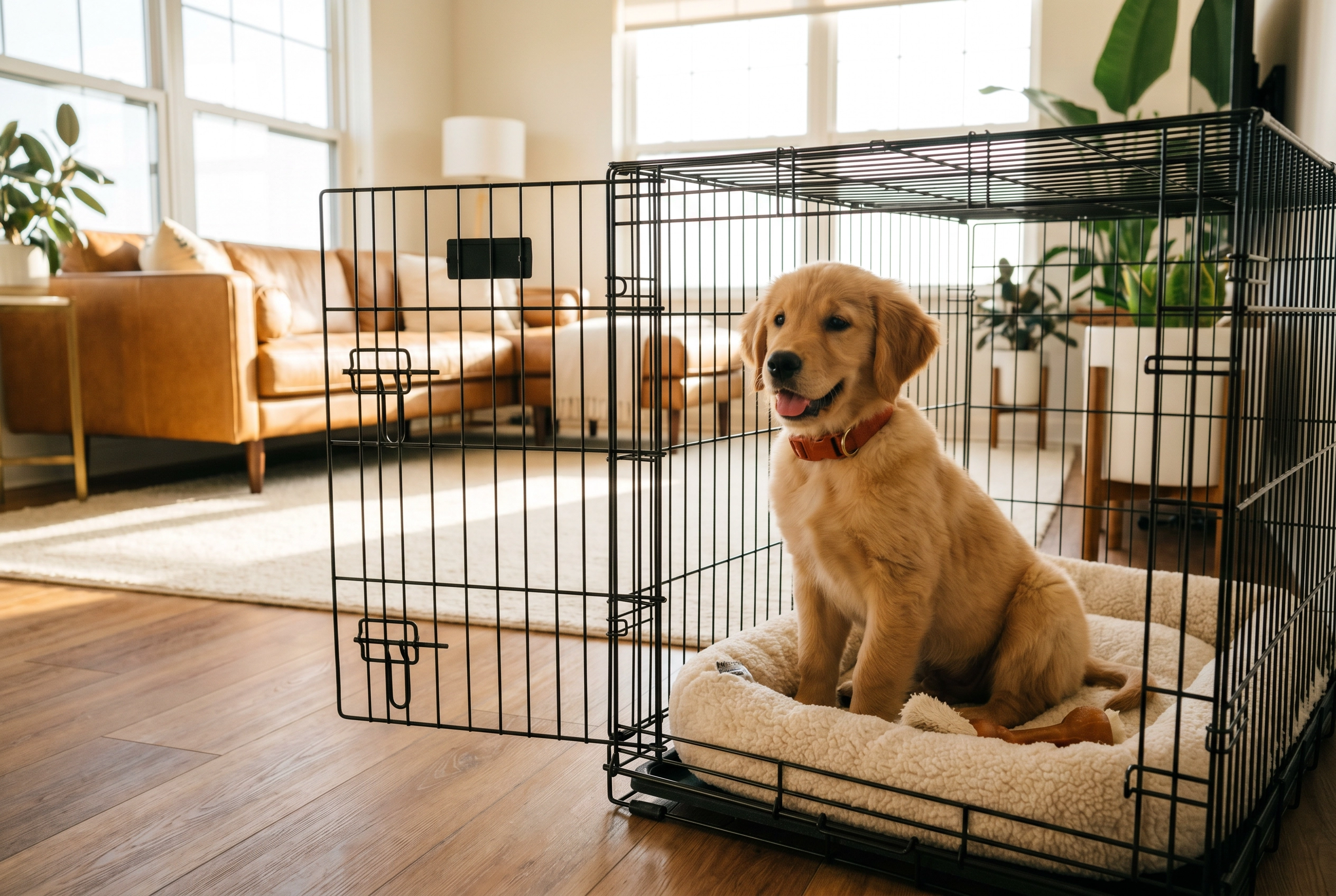
puppy crate training schedule
Puppies need an astonishing 16 to 20 hours of sleep every single day. Without a structured puppy crate training schedule, they simply will not get the rest they require. Instead, they turn into land sharks, biting your ankles and zooming around the living room.
 
Beyond just sleep, the crate is an incredible management tool. While you are training and raising puppy, you cannot watch them every single second. When you cannot supervise them, the crate ensures they do not get the opportunity to chew on inappropriate objects or have potty accidents in hidden corners of the house. By managing their environment, you are actively preventing the development of bad habits before they even start.
 
A crate is not a punishment; it is a den. It is a safe, quiet space where your puppy can decompress. By enforcing a schedule, you are teaching your dog how to self-soothe and relax. You are also preventing separation anxiety before it even starts.

The 1-Up, 2-Down Rule

The most effective puppy crate training schedule follows the “1-Up, 2-Down” rule. For every one hour your puppy is awake and active, they need two hours of sleep in their crate.
 
During that one hour awake, your puppy should be busy. They need a potty break immediately upon waking. Then, it is time for training, playing, or eating. You have to be more exciting than a squirrel and stimulate them mentally— which, I will admit, is a tall order. But engaging their brain tires them out faster than physical exercise alone.
 
After that hour, it is back into the crate for a two-hour nap. Yes, they might complain at first. But consistency is key.

Age-by-Age Potty and Crate Guidelines

A major part of your puppy crate training schedule is understanding how long your dog can actually hold their bladder. You cannot expect an 8-week-old puppy to hold it for six hours.
 
Here is a quick breakdown of what to expect based on your puppy’s age:
Puppy Age
Max Crate Time
Nighttime Potty Breaks Needed
8 - 10 Weeks
1 to 2 hours
2 to 3 breaks
11–14 Weeks
2 to 3 hours
1 to 2 breaks
15–16 Weeks
3 to 4 hours
0 to 1 break
5–6 Months
4 to 5 hours
Sleeps through the night
6+ Months
5 to 6 hours
Sleeps through the night

Remember, these are maximums. If your puppy is awake and playing, they will need to go potty much more frequently — sometimes every 20 to 30 minutes.


Sample Daily Puppy Crate Training Schedule

If you work from home or have the flexibility to be with your puppy during the day, this schedule is the gold standard.
Time
Activity
7:00 AM
Wake up and immediately go outside for a potty break
7:15 AM
Breakfast time — use their kibble for a 15 min short training session
7:30 AM
Second potty break, followed by short walk
8:00 AM
Crate time for a nap with chew bone
10:00 AM
Wake up, potty break, and 15- 30 minutes of play
10:30 AM
Back in the crate
12:30 PM
Potty break, and a short walk or training session
1:30 PM
Crate time for a nap
3:30 PM
Wake up, potty break, and play
4:00 PM
Back in the crate
6:00 PM
Dinner time, potty break, and evening family time
8:00 PM
Short crate nap while you relax
9:30 PM
Final playtime and last water offering
10:30 PM
Final potty break and bedtime in the crate

Crate Training Schedule for Working Owners
puppy crate training schedule

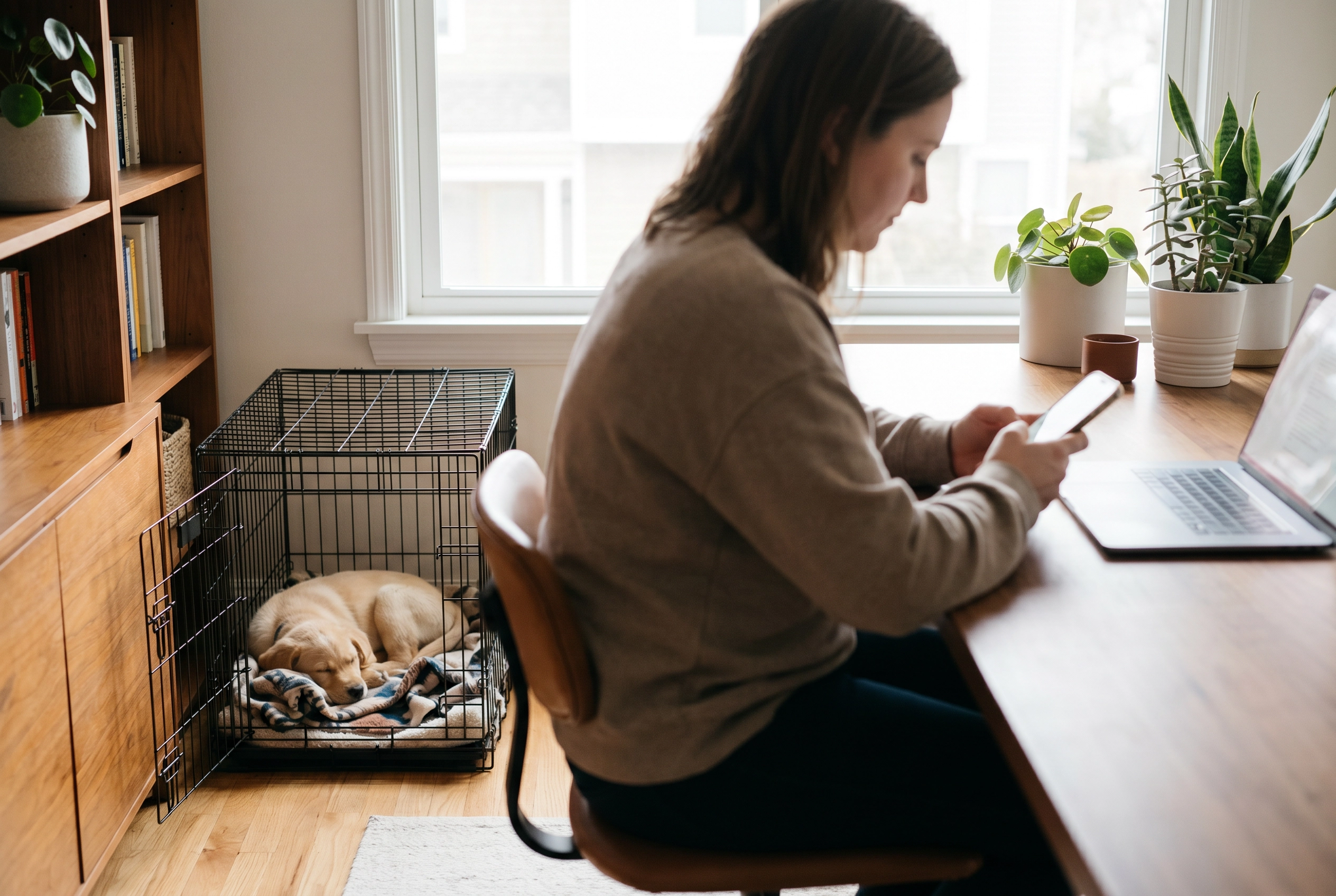
If you work outside the home, your puppy crate training schedule will look a bit different. You cannot leave a young puppy in a crate for eight hours straight.

Time
Activity
7:00 AM
Wake up, potty break, vigorous play/training, then breakfast
8:00 AM
Final potty break before you leave
8:15 AM
Puppy goes into the crate
12:00 PM
Dog walker arrives for a midday potty break and 30-40 minutes of play
1:00 PM
Puppy goes back into the crate
5:00 PM
You arrive home — immediate potty break, dinner, and evening activities

If you cannot come home at lunch, you must hire a dog walker or ask a neighbor to help. A puppy left in a crate too long will be forced to soil their space, which ruins the entire potty training process.

Ready to Train your Puppy?

If you are struggling to get your puppy to settle into a routine like this, it might be time to get some expert guidance. At The Virtual Dog Trainer, we specialize in helping owners build perfect routines. Check out our online training programs to get started.
 

Click the button below to schedule a call today!

Handling the Nighttime Routine
puppy crate training schedule

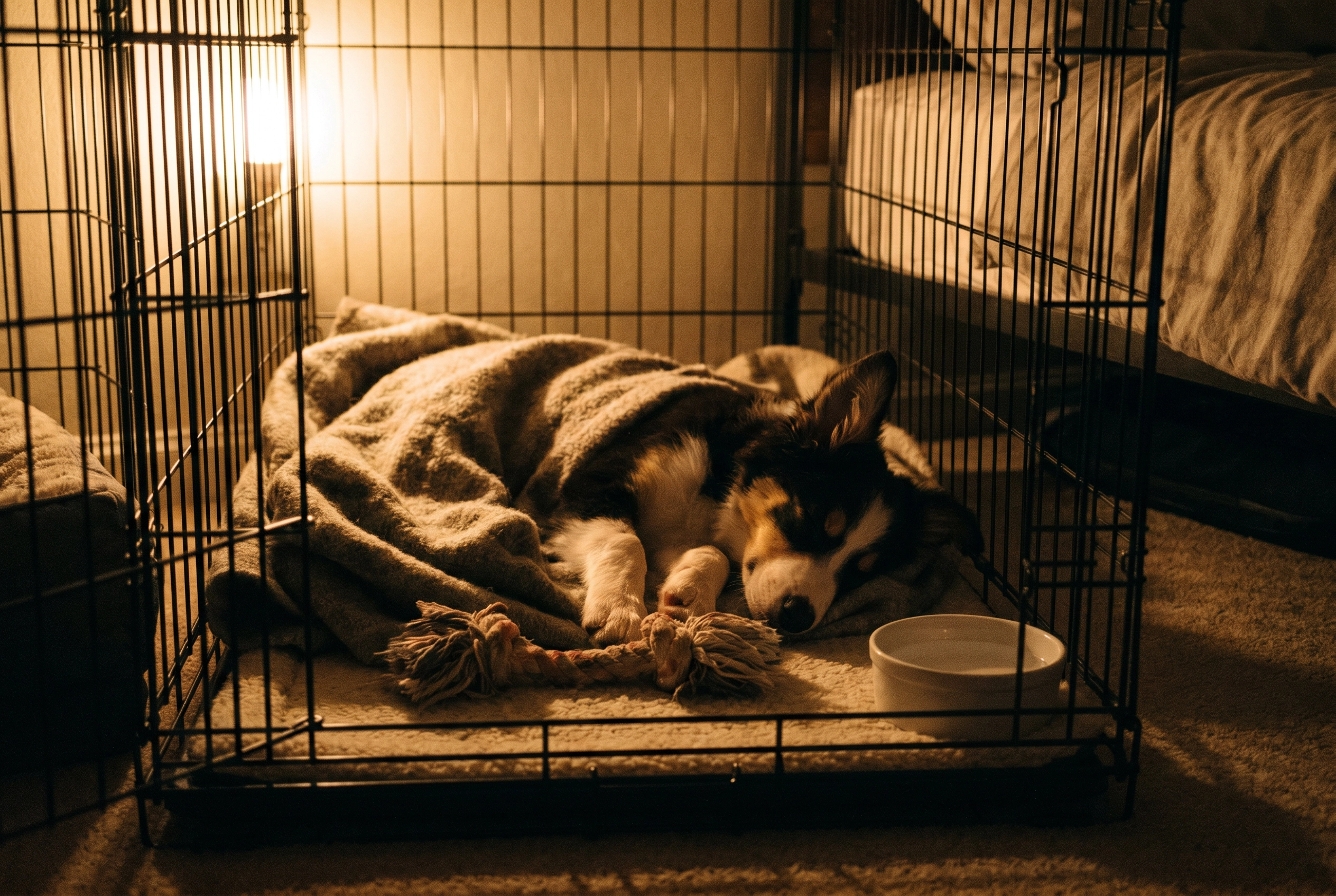
Nighttime can be the most stressful part of crate training. Your puppy is used to sleeping in a pile with their littermates, and now they are alone.

 
Keep the crate in your bedroom for the first few weeks. This allows you to hear when they wake up and need to go potty. When they whine in the middle of the night, take them outside on a leash. Do not play with them. Do not talk to them excitedly. It is a strictly business trip. Once they go, put them right back in the crate.
 

What to Do When Your Puppy Cries

This is where many owners fail. When your puppy cries in the crate, your instinct is to let them out. Do not do it.
 
If you know they do not need to go potty, you must ignore the whining. If you let them out when they cry, you have just taught them that crying opens the door. It is bribery, pure and simple — and it works beautifully for the dog, but terribly for you.
 
We believe in balanced training. This means setting fair rules. If your puppy is throwing a fit, a firm, calm “No” or a tap on the crate can interrupt the behavior. Once they are quiet, you can reward them with calm praise. Correcting without redirecting is like telling someone they are going the wrong way without telling them which way is right.

The Overtired Puppy: A Major Red Flag

One unique angle many people miss is recognizing when a puppy is overtired. If your puppy is suddenly biting harder, running frantically, or refusing to listen, they do not need more exercise. They need a nap.
 
Puppies do not know how to put themselves to sleep. They will fight it, just like a human toddler. When you see these overtired behaviors, it is time to enforce your puppy crate training schedule and put them down for a nap.

People Also Ask (FAQ)

What is the 10-10-10 rule for puppies?

The 10-10-10 rule is a guideline for socialization. It suggests exposing your puppy to 10 new people, 10 new places, and 10 new sounds every week to build confidence.

What is a good crate training schedule for puppies?

A good schedule alternates one hour of awake time (potty, play, train) with two hours of crate rest. This ensures they get the 16-20 hours of sleep they need.

What is the 3-3-3 rule for puppies?

The 3-3-3 rule explains the adjustment period for a new dog: 3 days to decompress, 3 weeks to learn the routine, and 3 months to feel completely at home.

What is a red flag puppy’s behavior?

Red flag behaviors include excessive resource guarding, extreme fearfulness that does not improve, or aggressive biting that goes beyond normal puppy teething.

How long should a puppy be in a crate during the day?

During the day, a puppy should not be in a crate for longer than their age in months plus one hour (e.g., a 3-month-old puppy can stay for 4 hours maximum).
 

Should I put my puppy in a crate at night?

Yes, putting your puppy in a crate at night keeps them safe, prevents destructive chewing, and is the most effective way to potty train them.

How do I stop my puppy from crying in the crate?

Ensure all their needs are met (potty, food, exercise). If they are just protesting, ignore the crying. You can also use a firm “No” to interrupt the whining, rewarding them when they are quiet.

At what age should a puppy sleep through the night without a crate break?

Most puppies can sleep through the night (about 6 to 8 hours) without needing a potty break by the time they are 4 to 5 months old

Ready to Master Your Puppy’s Routine?

Nailing your puppy crate training schedule is just the first step. If you are dealing with leash pulling, reactivity, or just want a dog you can take anywhere, we can help. At The Virtual Dog Trainer, we provide real-world solutions for real dog owners.
 
Stop struggling and start enjoying your dog. or dial 347-921-3376 to get started on your training journey.