
3 KEY TAKEAWAYS
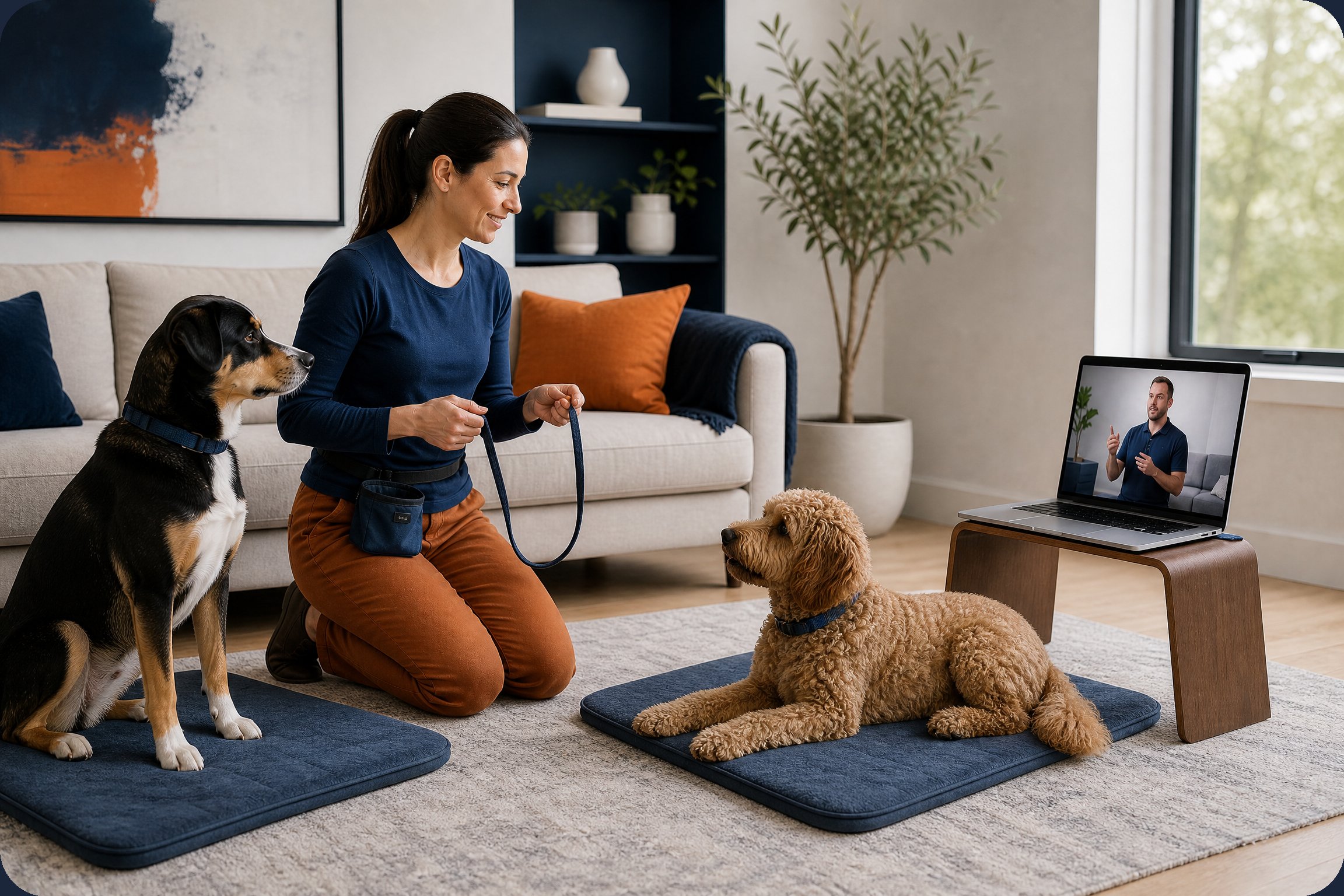
- Online training fits multi-dog homes by letting you work in a low-distraction environment, replay sessions, and coach the whole family.
- Train each dog individually before bringing training them together.
- Have clear goals – walking both dogs together without pulling, have them run free off-leash or address specific behavior issues
Can Online Dog Training Help Multiple Dogs?
Yes — online training can help multiple dogs by giving you replayable instructions, live troubleshooting feedback for multiple dogs, and step-by-step plans so every dog in your home learns the same rules.
If your having behavior issues with two or more dogs like guarding resources, or ignoring you because one dog wants to see what the other is up to, online training gives a practical, clear route to order without chaos. This guide shows how to use virtual coaching, the right tools, and a simple weekly plan to get results with multiple dogs
Why Online Training is Great for Multi-Dog Households
- Low-distraction practice: Work at your dogs’ threshold in the place they live instead of the busiest park.
- Replayable coaching: Re-watch demos and homework videos when you need a refresher.
- Whole-family consistency: Everyone can join live sessions and learn the same timing for cues and corrections.
- Real-time feedback: professional dog trainers see what your doing right and what to change to get fast results without the guess work.
How Online Training Handles Multiple Dogs By Understanding Each Dog
First is understanding that when your working with more then one dog each dog is an individual and may be at a different place obedience wise then the other so clearly understanding where each of your dogs are currently at is important.
What commands do each of them know individually? Can one dog listen outside while the other loses focus? What behavior issue does one have? when does it happen, does the other dog have the same issue?
These question allow you to understand your starting point with each of your dogs.
Train Each Dog Individually
Now that you understand each of your individual dogs baseline. The very next step is spending time building a relationship and training each dog individually before bringing them together.
Teach your dog to swim before tossing them in the deep end. if your dog can’t listen by himself no way he’s going to listen when is the other dog is present and vice versa.
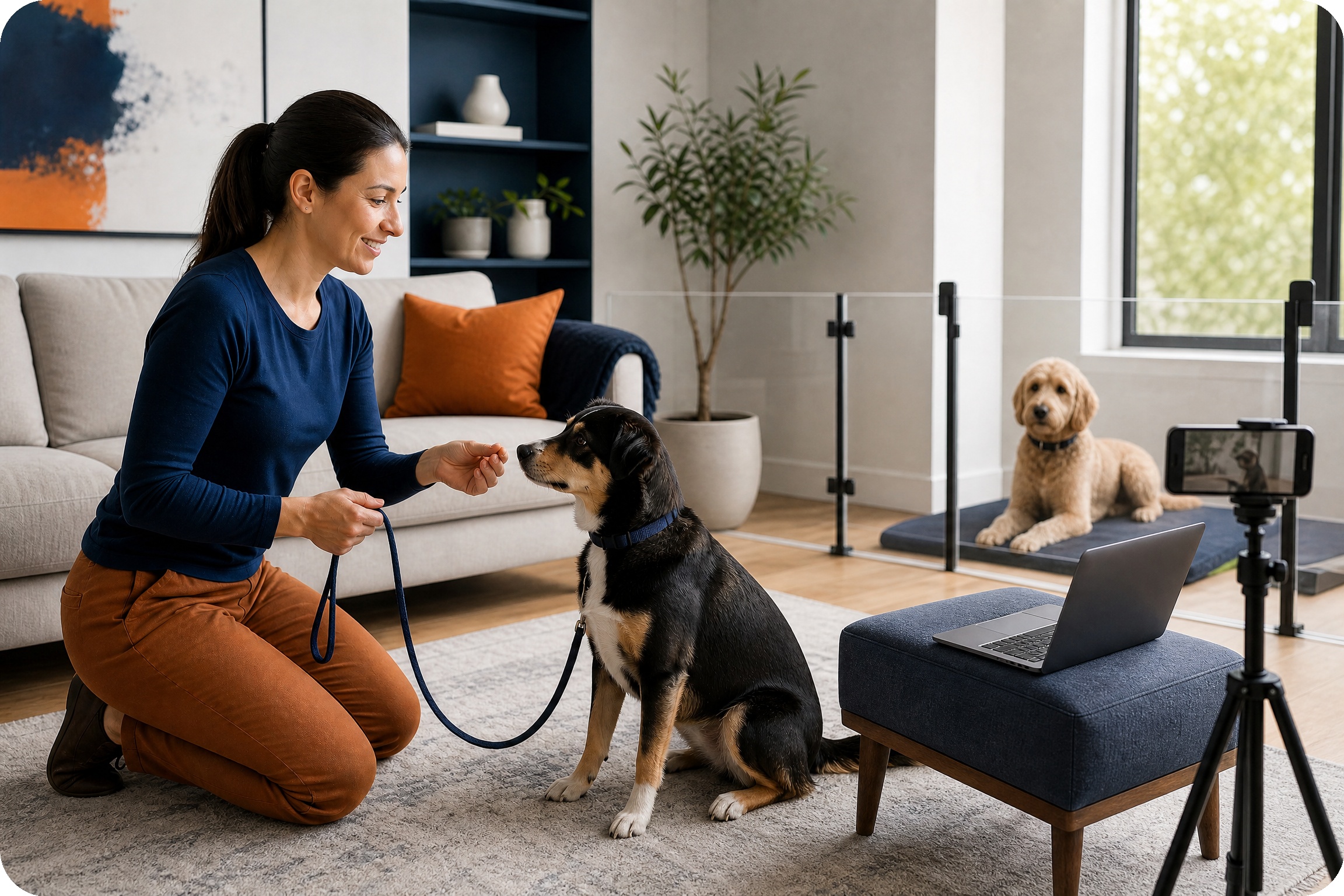
Step-by-step roadmap: Using online training to teach multiple dogs
- Prep & equipment: flat collars, leashes, a properly fitted prong collar if you’re using one, high-value treats (hot dogs or cooked chicken), tug toys/ balls, phone/tablet + tripod, and a quiet space.
- Baseline assessment: record short clips of each dog’s typical behavior and share them with your trainer or show live. So we have clear baseline of where each of your dog is currently at
- Individual foundation sessions: teach reliable cues (sit, down, recall, wait) for each dog separately.
- Place training & rotation: use mats/beds as “Place.” Train dog A while dog B learns to remain calm, then swap.
- Take it public: Work with them out and about in public settings to ensure that both your dogs listen everywhere not just at home
- Maintenance: weekly or biweekly check-ins, homework videos, and occasional live refreshers.
When to train dogs separately vs. together
When you have one dog, dog A- that is not to the level of the other dog, dog B, – you train the dogs individually until dog A understands the same concepts dog B does
Sample weekly plan for two dogs
- Monday: Dog A — 10–12 minutes of foundation work. Dog B — station practice and calm-rewarding.
- Wednesday: Swap roles.
- Friday: 15-minute paired session (short recall drills, reward rotation).
- Sunday: Send video homework to your trainer for feedback.
When online training might not be enough
Common owner mistakes with multiple dogs (and how online coaching fixes them)
- Mistake: Training both dogs at once before building individual foundations. Fix: Sequence one-on-one wins before pairing
- Mistake: Family members give different commands. Fix: Share recorded sessions so everyone learns the same timing.
- “Can online training work for two dogs?” Yes — start with separate foundation sessions, then use stationing and rotation to bring them together safely.
- “Do I need special collars for online training?” Use flat collars, slip leashes, and a properly fitted prong collar if needed; avoid retractable leashes and front-clip harnesses.
- “How long before my dogs behave together?” It depends on the dogs and consistency; many owners see measurable progress in 4–8 weeks with regular practice.
Struggling to get your dog to listen?
Or click the button below to schedule a Free Transformation call today!
When online training shines
- Real-world environment: Training happens where behaviors occur, not in an unfamiliar classroom.
- Replayability: Rewatch trainer demos and your own videos to fine-tune timing.
- Family-wide learning: Everyone can attend a virtual session — consistency improves dramatically.
- Get live feedback to make immediate changes
- Get video feedback before your training session – to make any changes before your next session