
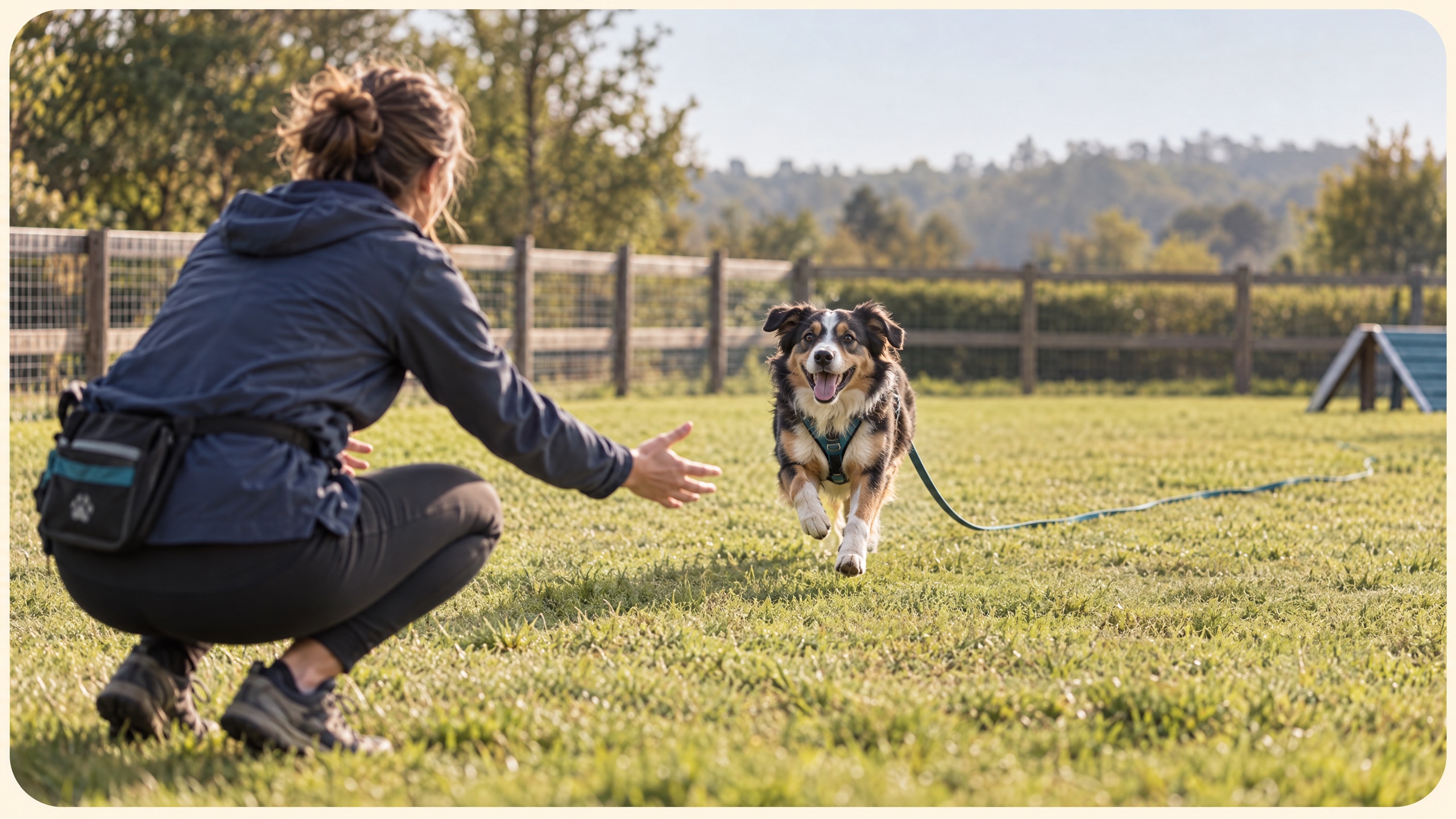
Dog recall training can be the difference between a relaxed walk and a frightening moment when your dog bolts toward danger. If your dog comes indoors but ignores you outside, you are not alone—and you can build a more reliable response with a clear plan, better rewards, and safe practice before going off leash.
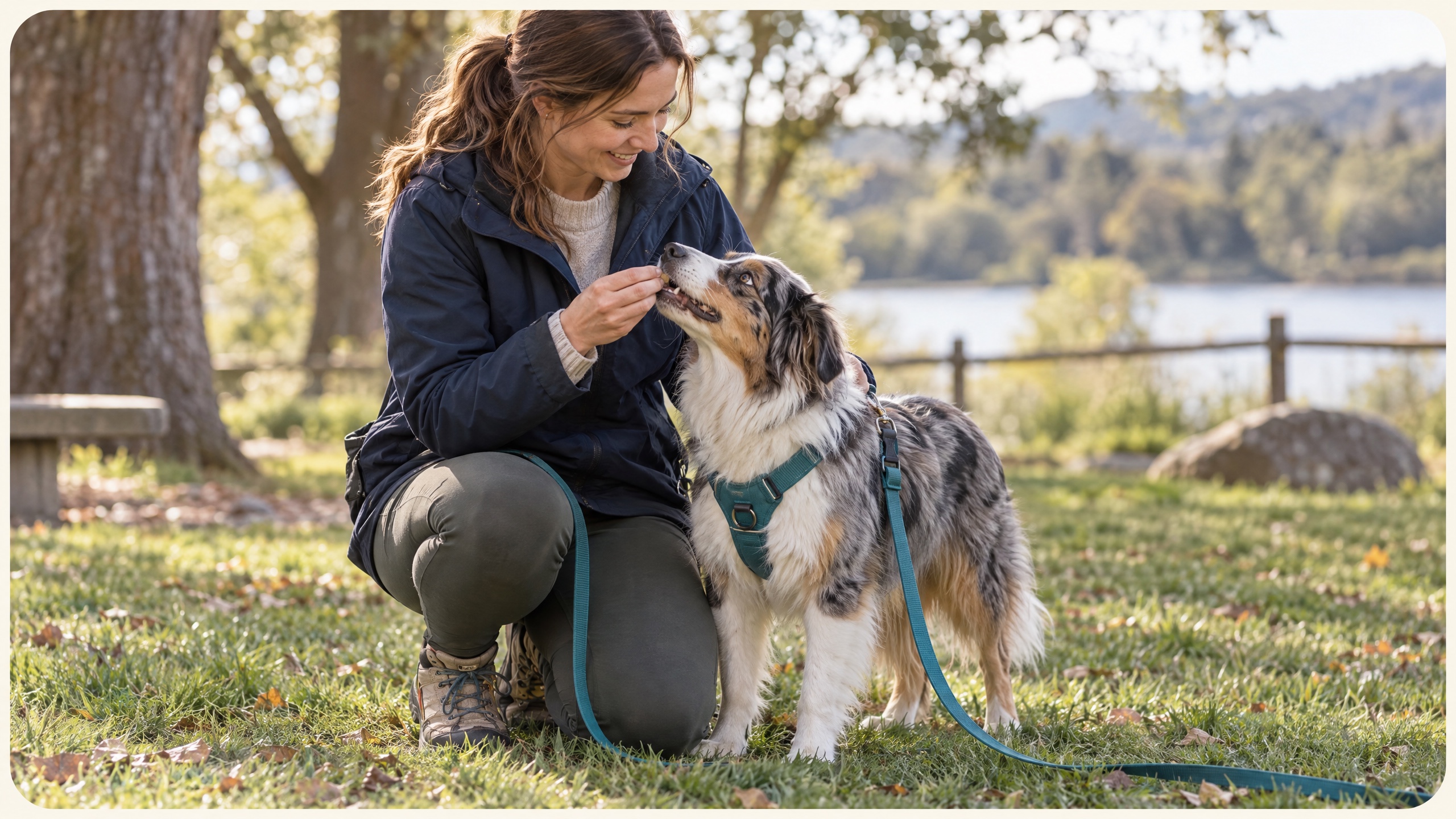
Why does your dog ignore you when you call?
You call your dog at the park, and suddenly the sniffing, squirrels, and other dogs are more interesting than you. You repeat the cue, raise your voice, and feel your frustration climb. The more this happens, the more tempting it is to assume your dog is stubborn or that recall training simply does not work.
Usually, your dog has not learned that coming to you pays off in every setting. A cue that works in a quiet room may not yet mean the same thing around exciting distractions. The good news is that you can teach the skill in small steps, protect your dog while you practice, and build confidence together.
Start with a recall your dog wants to answer
A reliable recall is more than teaching a word. Your dog needs to understand what you are asking, and you need to communicate clearly enough that they can respond around the real distractions in everyday life. That is why good recall work develops the dog and the handler together.
Pick one short cue, such as “come” or “here,” and use it consistently. If you have repeated a cue many times without follow-through, pause and ask a trainer whether to rebuild its meaning or choose a fresh one. Keep your communication clear and say it when you have set your dog up to succeed.
Before practicing, decide what “come” means in your home. For most dogs, it should mean moving all the way to you and allowing you to calmly take hold of the collar or harness, not stopping several feet away and running off again.
What makes a recall reward effective?
Start with something your individual dog values: food, a toy, a game, praise, or the chance to return to sniffing when it is safe. Dogs are not all motivated by the same thing, so notice what helps your dog stay engaged and respond.
Timing matters. A reward delivered when your dog gets all the way to you makes the desired response clear; as distractions grow, adjust the reward and the training plan to the dog in front of you. Positive reinforcement can be an important part of training, alongside clear communication and consistent boundaries.
How to train a dog to come when called
Begin indoors or in a quiet, enclosed area where your dog is comfortable and unlikely to wander away. Stand close, say the cue in a cheerful voice, and take a few quick steps backward to invite your dog to follow.
When your dog reaches you, praise and reward right away. Gently touch the collar or harness, give another small reward, and then release your dog with a consistent word such as “free.” That brief collar touch helps teach your dog that being caught is safe and does not always end the fun.
Repeat a few times, then take a break. Short, successful sessions are more useful than calling over and over until your dog tunes out. If your dog does not respond, avoid turning the moment into a confrontation; make the next attempt easier by reducing distance or distraction and clarifying what you are asking.
Once your dog is responding easily nearby, practice with a family member taking turns calling. Keep your dog close enough to succeed, reward the arrival, and release them back to the activity. This helps teach that coming to you does not always mean the good part is over.
What not to do when your dog steals food
Puppy-proof the kitchen even if your dog is no longer a puppy: keep food, dishes, and trash out of reach, push chairs in, and block access when you cannot supervise. The less often your dog gets a food reward from the counter, the less the behavior is reinforced. Management matters for adult dogs, too.
When you are present and your dog jumps up, interrupt promptly and calmly: block access to the counter or guide your dog off, then briefly remove the opportunity to investigate or get attention. This is a simple consequence—the jump no longer gets access to the counter—and it makes the behavior unproductive without yelling, hitting, startling, or using painful devices. As soon as your dog is back on the floor, cue “place” or another known behavior and reward that choice away from the counter.
Avoid delayed punishment or DIY “booby traps.” Your dog may not connect a delayed reaction with the earlier choice, and frightening or startling them can create new problems without teaching a useful alternative. Keep tempting items out of reach and return to easier training steps. The goal is not simply to stop a dog from getting on counters; it is to build a routine your dog can follow even when the kitchen is interesting.
Build the cue before adding distance
Increase only one challenge at a time: distance, duration, or distraction. If you move farther away, keep the environment simple. If you introduce a new distraction, shorten the distance and use a secure setup.
Call when your dog is likely to turn toward you, not when they are already racing toward another dog or locked onto a squirrel. You are building a habit of responding, not testing your dog’s limits. If your dog struggles, make the next repetition easier and reward generously for engagement.
Long-line recall training keeps practice safer
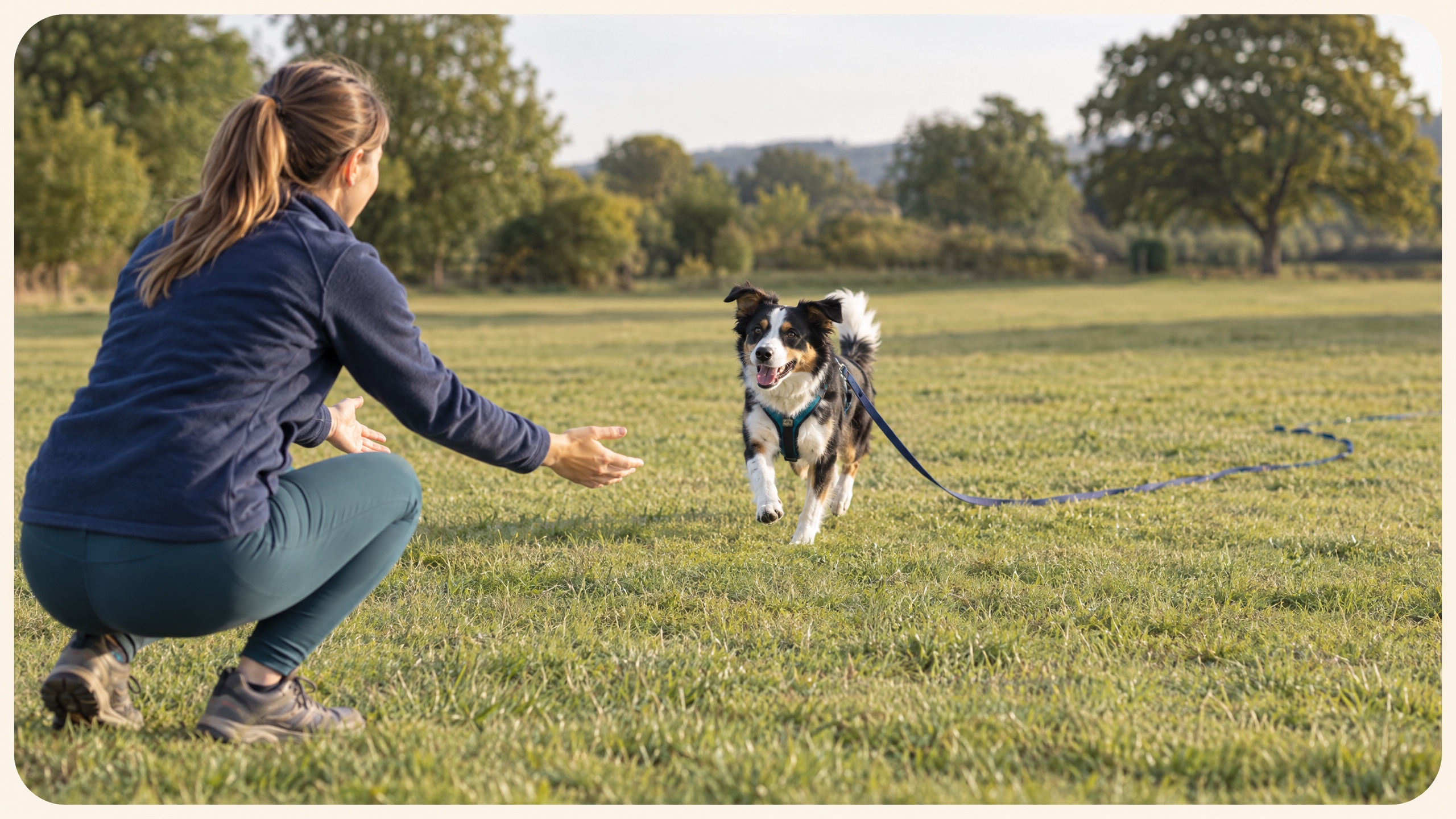
A long line lets your dog explore while you retain a safety connection. Use a line designed for dog training, attach it to a well-fitted harness, and practice in an open area away from traffic, bikes, and crowded paths. Keep the line organized so it does not wrap around your hands, legs, or the dog.
Let your dog move a comfortable distance away, then call once when they are not deeply distracted. As soon as your dog turns, encourage them toward you and reward when they arrive. If they do not respond, use the line calmly to prevent them from rehearsing a full departure; do not jerk, drag, or use it to punish.
A long line is a training safety tool, not proof that your dog is ready to be off leash. Avoid attaching it to a collar where sudden tension could injure the neck. If the environment is busy or your dog is powerful, get guidance on equipment and handling before practicing.
Struggling to get your dog to listen?
If you are tired of guessing your way through training and want a clear, customized roadmap, it might be time to step away from the pre-recorded videos. Check out our online dog training courses to see how live, personalized coaching can actually change your dog’s behavior.
Or click the button below to schedule a Free Transformation call today!
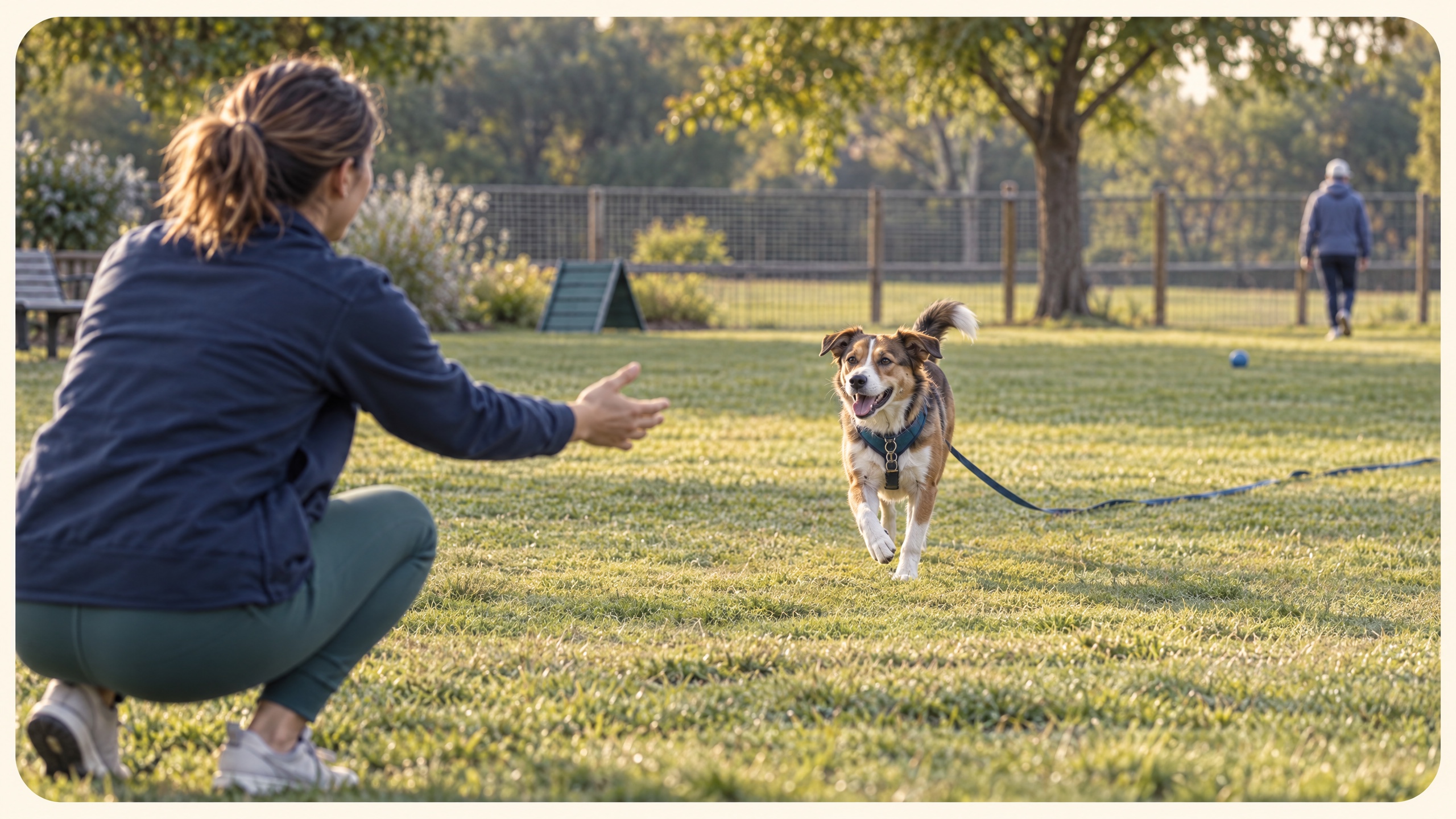
Dog recall training with distractions
The real test is not whether your dog can come in the kitchen. It is whether they can respond when something else matters. Build toward those moments gradually, beginning with mild distractions your dog can notice without becoming overwhelmed.
You might practice in the yard, then in a quiet outdoor space, then farther from people or dogs. Keep your dog on leash or a long line unless you are in a secure, legally appropriate area. Reward a quick turn and a complete return, then let your dog go back to sniffing when it is safe.
If your dog cannot respond, look at the whole picture before labeling them stubborn. The distraction may be too close, your timing or cue may be unclear, or the exercise may be too difficult for this dog right now. Increase distance, choose an easier setting, and adjust your approach to help your dog understand and succeed.
Make coming back part of the fun
During practice, call your dog, reward them, and then release them to explore again when it is safe. This simple pattern helps prevent a common problem: your dog learns that recall always ends play, so they avoid coming close.
Sometimes you will need to leash up and leave. When possible, reward the arrival first, then calmly attach the leash. Avoid calling your dog only for unpleasant things such as ending the park visit, giving medication, or a bath; go get them safely or create a separate, easy routine for those
What to do when your dog won’t come when called
Do not repeat the cue louder and louder. Repeating it while your dog ignores you can teach that the first call does not matter. Instead, keep your dog safe, use the line or barrier to prevent a dangerous choice, and make the next repetition easier.
Do not punish your dog after they finally reach you, even if they took a long time. Dogs connect consequences to what is happening in that moment; scolding on arrival can make returning to you feel risky next time. Take a breath, reward the return, and review what made that attempt too hard.
If you have called repeatedly without success, pause recall practice in that setting. Use a leash to guide the situation, then return to training in a quieter place. If fear, chasing, aggression, or bolting is involved, work with a qualified trainer to build a plan that prioritizes safety.
When is off-leash recall training appropriate?
There is no single number of successful repetitions that makes every dog safe off leash. Consider your dog’s response across different locations, distractions, distances, and handlers, and be honest about the consequences of a missed cue.
Until your dog is dependable in a particular environment, keep them on leash or a long line. Follow local leash laws and use only secure, permitted areas for off-leash practice. A fenced dog park is not automatically a good training space, especially if your dog is uncomfortable around unfamiliar dogs.
Recall is a safety skill, but it is not a guarantee against every emergency. Even well-trained dogs can startle, chase, or miss a cue, so thoughtful management remains important.
Dog Recall Training: Teach Your Dog to Come When Called
Dog recall training can be the difference between a relaxed walk and a frightening moment when your dog bolts toward danger. If your dog comes indoors but ignores you outside, you are not alone—and you can build a more reliable response with a clear plan, better rewards, and safe practice before going off leash.
Why does your dog ignore you when you call?
You call your dog at the park, and suddenly the sniffing, squirrels, and other dogs are more interesting than you. You repeat the cue, raise your voice, and feel your frustration climb. The more this happens, the more tempting it is to assume your dog is stubborn or that recall training simply does not work.
Usually, your dog has not learned that coming to you pays off in every setting. A cue that works in a quiet room may not yet mean the same thing around exciting distractions. The good news is that you can teach the skill in small steps, protect your dog while you practice, and build confidence together.
Start with a recall your dog wants to answer
A reliable recall is more than teaching a word. Your dog needs to understand what you are asking, and you need to communicate clearly enough that they can respond around the real distractions in everyday life. That is why good recall work develops the dog and the handler together.
Pick one short cue, such as “come” or “here,” and use it consistently. If you have repeated a cue many times without follow-through, pause and ask a trainer whether to rebuild its meaning or choose a fresh one. Keep your communication clear and say it when you have set your dog up to succeed.
Before practicing, decide what “come” means in your home. For most dogs, it should mean moving all the way to you and allowing you to calmly take hold of the collar or harness, not stopping several feet away and running off again.
What makes a recall reward effective?
Start with something your individual dog values: food, a toy, a game, praise, or the chance to return to sniffing when it is safe. Dogs are not all motivated by the same thing, so notice what helps your dog stay engaged and respond.
Timing matters. A reward delivered when your dog gets all the way to you makes the desired response clear; as distractions grow, adjust the reward and the training plan to the dog in front of you. Positive reinforcement can be an important part of training, alongside clear communication and consistent boundaries.
How to train a dog to come when called
Begin indoors or in a quiet, enclosed area where your dog is comfortable and unlikely to wander away. Stand close, say the cue in a cheerful voice, and take a few quick steps backward to invite your dog to follow.
When your dog reaches you, praise and reward right away. Gently touch the collar or harness, give another small reward, and then release your dog with a consistent word such as “free.” That brief collar touch helps teach your dog that being caught is safe and does not always end the fun.
Repeat a few times, then take a break. Short, successful sessions are more useful than calling over and over until your dog tunes out. If your dog does not respond, avoid turning the moment into a confrontation; make the next attempt easier by reducing distance or distraction and clarifying what you are asking.
Once your dog is responding easily nearby, practice with a family member taking turns calling. Keep your dog close enough to succeed, reward the arrival, and release them back to the activity. This helps teach that coming to you does not always mean the good part is over.
Build the cue before adding distance
Increase only one challenge at a time: distance, duration, or distraction. If you move farther away, keep the environment simple. If you introduce a new distraction, shorten the distance and use a secure setup.
Call when your dog is likely to turn toward you, not when they are already racing toward another dog or locked onto a squirrel. You are building a habit of responding, not testing your dog’s limits. If your dog struggles, make the next repetition easier and reward generously for engagement.
Long-line recall training keeps practice safer
A long line lets your dog explore while you retain a safety connection. Use a line designed for dog training, attach it to a well-fitted harness, and practice in an open area away from traffic, bikes, and crowded paths. Keep the line organized so it does not wrap around your hands, legs, or the dog.
Let your dog move a comfortable distance away, then call once when they are not deeply distracted. As soon as your dog turns, encourage them toward you and reward when they arrive. If they do not respond, use the line calmly to prevent them from rehearsing a full departure; do not jerk, drag, or use it to punish.
A long line is a training safety tool, not proof that your dog is ready to be off leash. Avoid attaching it to a collar where sudden tension could injure the neck. If the environment is busy or your dog is powerful, get guidance on equipment and handling before practicing.
Dog recall training with distractions
The real test is not whether your dog can come in the kitchen. It is whether they can respond when something else matters. Build toward those moments gradually, beginning with mild distractions your dog can notice without becoming overwhelmed.
You might practice in the yard, then in a quiet outdoor space, then farther from people or dogs. Keep your dog on leash or a long line unless you are in a secure, legally appropriate area. Reward a quick turn and a complete return, then let your dog go back to sniffing when it is safe.
If your dog cannot respond, look at the whole picture before labeling them stubborn. The distraction may be too close, your timing or cue may be unclear, or the exercise may be too difficult for this dog right now. Increase distance, choose an easier setting, and adjust your approach to help your dog understand and succeed.
Make coming back part of the fun
During practice, call your dog, reward them, and then release them to explore again when it is safe. This simple pattern helps prevent a common problem: your dog learns that recall always ends play, so they avoid coming close.
Sometimes you will need to leash up and leave. When possible, reward the arrival first, then calmly attach the leash. Avoid calling your dog only for unpleasant things such as ending the park visit, giving medication, or a bath; go get them safely or create a separate, easy routine for those moments.
What to do when your dog won’t come when called
Do not repeat the cue louder and louder. Repeating it while your dog ignores you can teach that the first call does not matter. Instead, keep your dog safe, use the line or barrier to prevent a dangerous choice, and make the next repetition easier.
Do not punish your dog after they finally reach you, even if they took a long time. Dogs connect consequences to what is happening in that moment; scolding on arrival can make returning to you feel risky next time. Take a breath, reward the return, and review what made that attempt too hard.
If you have called repeatedly without success, pause recall practice in that setting. Use a leash to guide the situation, then return to training in a quieter place. If fear, chasing, aggression, or bolting is involved, work with a qualified trainer to build a plan that prioritizes safety.
When is off-leash recall training appropriate?
There is no single number of successful repetitions that makes every dog safe off leash. Consider your dog’s response across different locations, distractions, distances, and handlers, and be honest about the consequences of a missed cue.
Until your dog is dependable in a particular environment, keep them on leash or a long line. Follow local leash laws and use only secure, permitted areas for off-leash practice. A fenced dog park is not automatically a good training space, especially if your dog is uncomfortable around unfamiliar dogs.
Recall is a safety skill, but it is not a guarantee against every emergency. Even well-trained dogs can startle, chase, or miss a cue, so thoughtful management remains important.
A simple practice plan you can repeat
Practice for a few minutes once or twice a day rather than doing one long, exhausting session. Start where your dog can succeed, reward promptly, and finish while your dog is still engaged.
For example, you might do a few short recalls indoors, then practice in a quiet yard on a long line. On another day, ask for a return when your dog is mildly interested in sniffing. Keep notes on the distance and distractions that worked so you know what to build on next time.
As your dog improves, vary the reward and location without making every repetition harder. Continue to pay well for especially challenging recalls. Reliable behavior comes from consistent practice over time, not from one perfect session.
Need help making recall work in real life?
If your dog listens at home but disappears into the world outdoors, the answer is not always another command. The Virtual Dog Trainer’s approach is to teach owners to understand their dog, develop a clear communication system, and practice with a customized plan. Online coaching includes live sessions and feedback on training videos; Awoken K9 provides individualized dog training in the Tampa area.
You do not have to guess whether to increase distance, change your timing, or step back to an easier environment. Coaching can help you read your dog’s state of mind, communicate more clearly, and practice the right skills for your dog and your goals. If you would like help choosing a next step, ask about a free transformation session and see whether the approach is a fit.
People Also Ask about dog recall training
How do I teach a dog recall?
Choose one cue, practice close to your dog in a quiet place, and reward them as soon as they come all the way to you. Gradually add distance and distractions while using a leash or long line for safety.
What should I do if my dog ignores the recall command?
Keep your dog safe, avoid repeating or punishing, and make the next attempt easier. Use a leash or long line to prevent them from running off, then practice again in a quieter setting.
Where can I practice dog recall training near me?
Look for a quiet, permitted outdoor area with enough space and low distractions, and keep your dog on leash or a long line. If you want coaching near you, search for a qualified dog trainer in your area; Awoken K9 serves Tampa and surrounding communities, while The Virtual Dog Trainer provides online coaching.
Is there a dog trainer near me who can help with off-leash recall?
A local trainer can assess your dog and help you build recall before you consider off-leash practice. Awoken K9 serves the Tampa area, and The Virtual Dog Trainer offers online coaching for owners who want guidance from home.
Can I get virtual dog recall training near me?
Yes. Virtual coaching can help you practice in the places where your dog actually needs the skill, with a trainer guiding your plan and reviewing progress. The Virtual Dog Trainer offers online dog training; check the program details to see whether the support fits your dog’s needs.
Give your dog a better reason to come back
A recall cue gets stronger when your dog understands it, trusts what happens next, and has practiced succeeding around gradually harder distractions. Start today in a safe, quiet place, reward the return, and build from there.
Ready to stop guessing and create a practical plan for your dog? Call The Virtual Dog Trainer at 347-921-3376 to talk through your goals and find out what your next step could look like.