
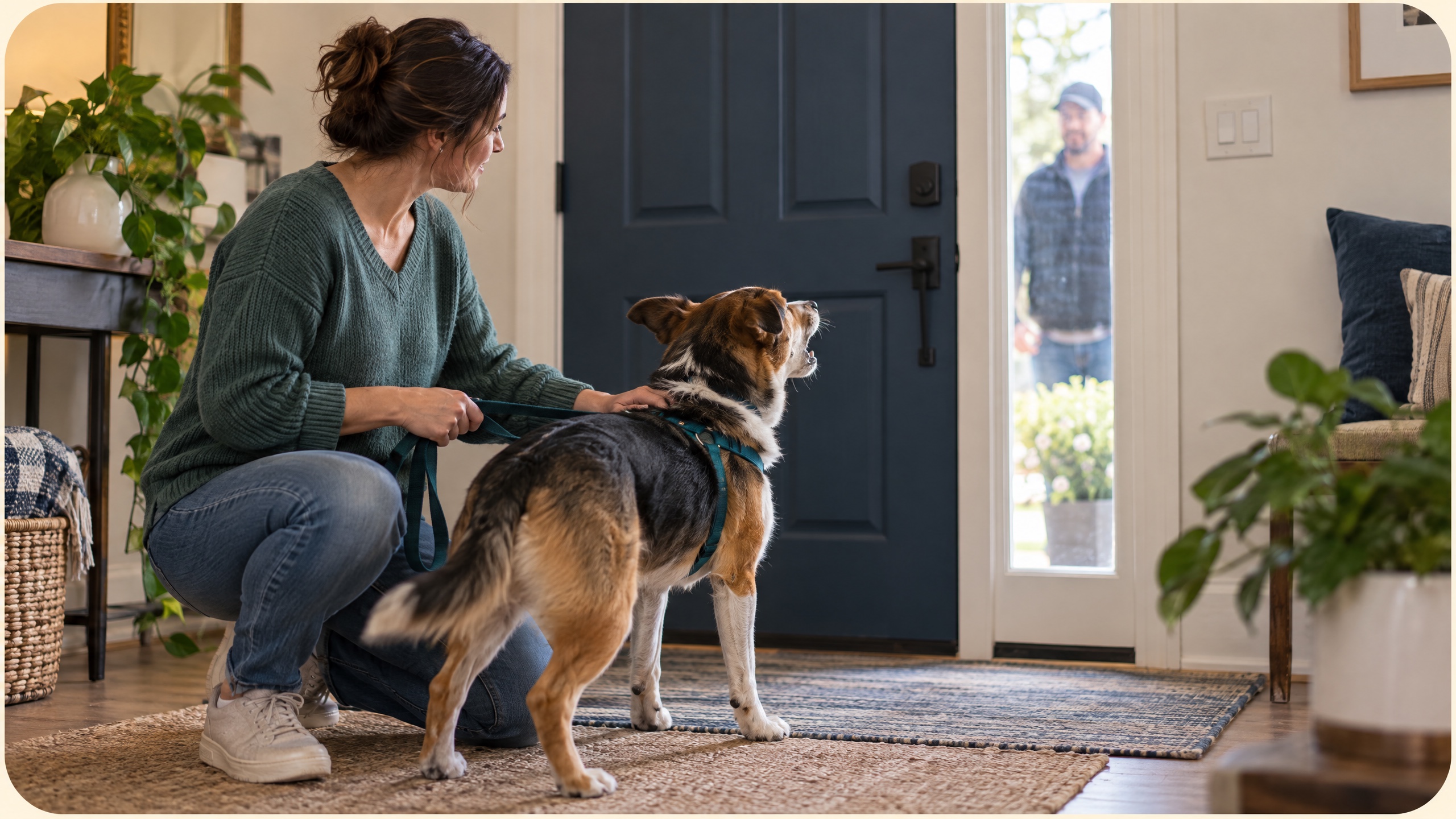
How to Stop Dog Barking at the Door and Welcome Visitors Calmly
If you’re searching for how to stop dog barking at door, you may already dread the doorbell, a knock, or the moment a guest steps inside. The barking can feel impossible to control, but you’re not failing—and your dog isn’t being “bad.” With a clear plan and consistent practice, you can teach your dog what to do instead.
Start with a plan before the next visitor arrives
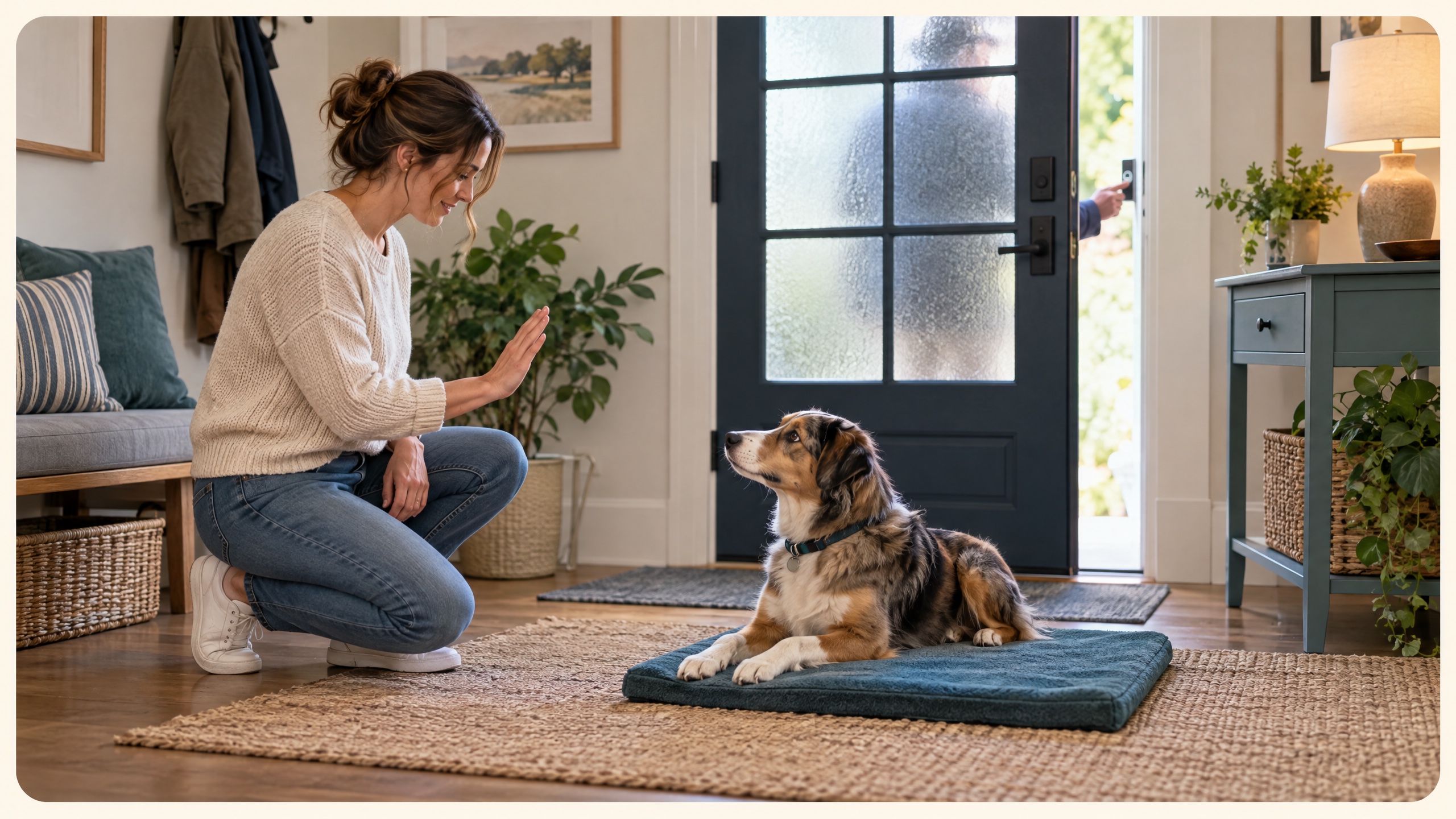
For now, don’t open the door with your dog loose and rushing ahead. Put your dog on leash before guests arrive. This is not the whole training plan; but it is one of the most important parts as it prevents another full-speed rehearsal while you teach a better routine. Every time your dog practices a behavior it gets stronger.
Also be sure to tell visitors what to do before they enter. Ask them to stay neutral at first: no reaching, excited talking, pushing the dog away, or greeting a barking dog. Attention—even “No, get down!”—can be rewarding to some dogs, so everyone needs to follow the same rules.
Easiest way to accomplish this is just tell your guest to ignore your pup for the first few minutes, especially if your dog is already excited to greet your guest, you want to make it as easy as possible for your pup to be successful b
Why is my dog barking at visitors?
Start by asking what sets the barking off and what happens right after it. Is it the doorbell, a knock, seeing a person through a window, or the guest stepping inside? Does your dog bark and move forward, or bark while trying to retreat?
Those details matter because dogs are individuals, and the reason for the behavior changes how you should train.
The barking may continue because it works for your dog. A person may leave, creating more space; a guest may talk to or touch the dog; or the excitement itself may become part of a familiar routine. Your job is to understand the pattern, prevent your dog from rehearsing it, and teach your dog what he did right and wrong by with clear communication.
Become relevant to your dog before the doorbell challenge
If your dog does not respond to you in a calm room, the front door is a difficult place to start. First practice simple skills with the door closed: responding to their name, checking in with you, following a leash cue, and waiting for permission before moving through a doorway. Keep sessions short and make sure your dog understands what earns a reward.
Then teach a specific door boundary. With your dog on leash, approach the closed door and reach for the handle. If your dog moves ahead, calmly say no & prevent access and reset. Reward the moment your dog waits or turns back to you. Repeat until your dog can hold position, then open the door a small amount and close it again if they try to push through.
How do I stop my dog from barking at the door?
First prevent your dog from charging the entrance, then teach your dog doorway boundaries away from when you have guest. Once you practiced the you can either teach your dog a clear alternative with the door closed before adding knocks or visitors. or simply tell your dog no and punish the barking.
The most important aspect is recreating the scenario in which your dog struggles so that you have the opportunity to reward the correct behavior.
that way you are being clear with your dog. You make it clear door bell , your dog starts barking you say “no” consequence for barking then recreate the same scenario and then reward your dog for making a better choice. Clarity trumps all, you can accomplish the same thing with an alternative behavior like going to “bed”.
Practice before you need it
Don’t wait until you need your dog to listen to work on it, practice before you need it in real world settings. if you don’t have many guest over practice with your family, friends or just your spouse. That way you “teach your dog how to swim instead of just tossing them in the deep end.”
What should you do when guests actually arrive?
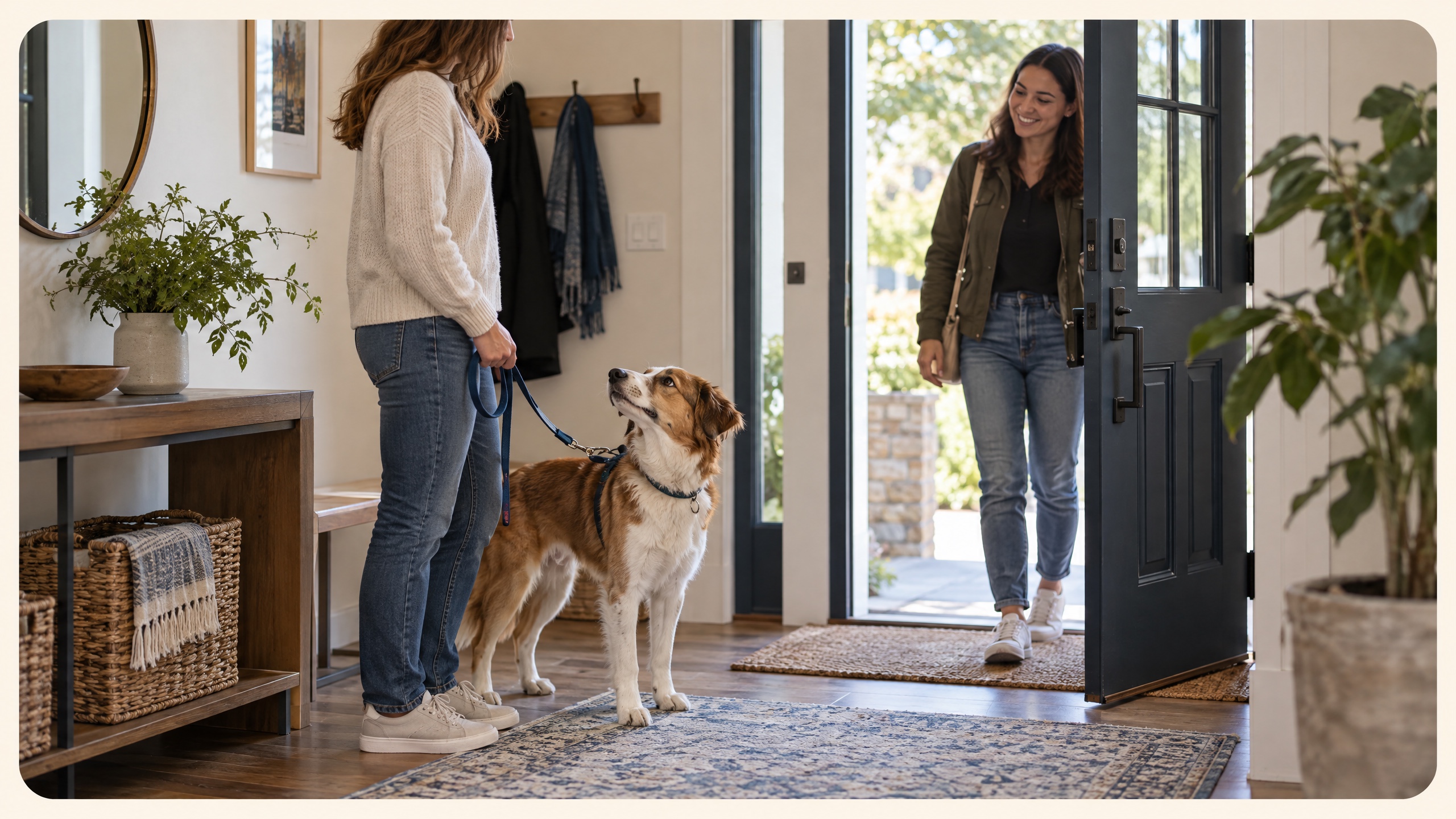
Set up before the knock. Put the leash on, choose where your dog will wait, and tell the guest to ignore the dog until you say otherwise. Ask your dog to check in or wait before you open the door. If they surge forward or start barking, calmly close the door or move them back, reset, and try an easier version.
When your dog gives you the behavior you practiced, reward it. At first, the visitor can remain outside or stay neutral while you reward your dog for waiting. Only make the greeting part of the exercise if your dog is calm enough to respond and you can keep the interaction controlled. If the dog gets overexcited, increase distance and restart rather than letting the guest pet or talk to them through the barking.
Consistency matters. If one visitor ignores the dog but another squeals, pets, or pushes them away, the dog gets mixed information. give your guests a heads up on the routine in advance, and use a separate room or barrier for visits when you cannot supervise or train safely.
When is barking a safety concern?
A dog who is barking may be excited, uncertain, fearful, or trying to create space. If the barking comes with lunging, snapping, a bite history, or a dog who cannot settle around visitors, don’t run practice sessions with unsuspecting guests. Use secure separation and get help from a qualified trainer who can assess your specific dog and guide the handling plan.
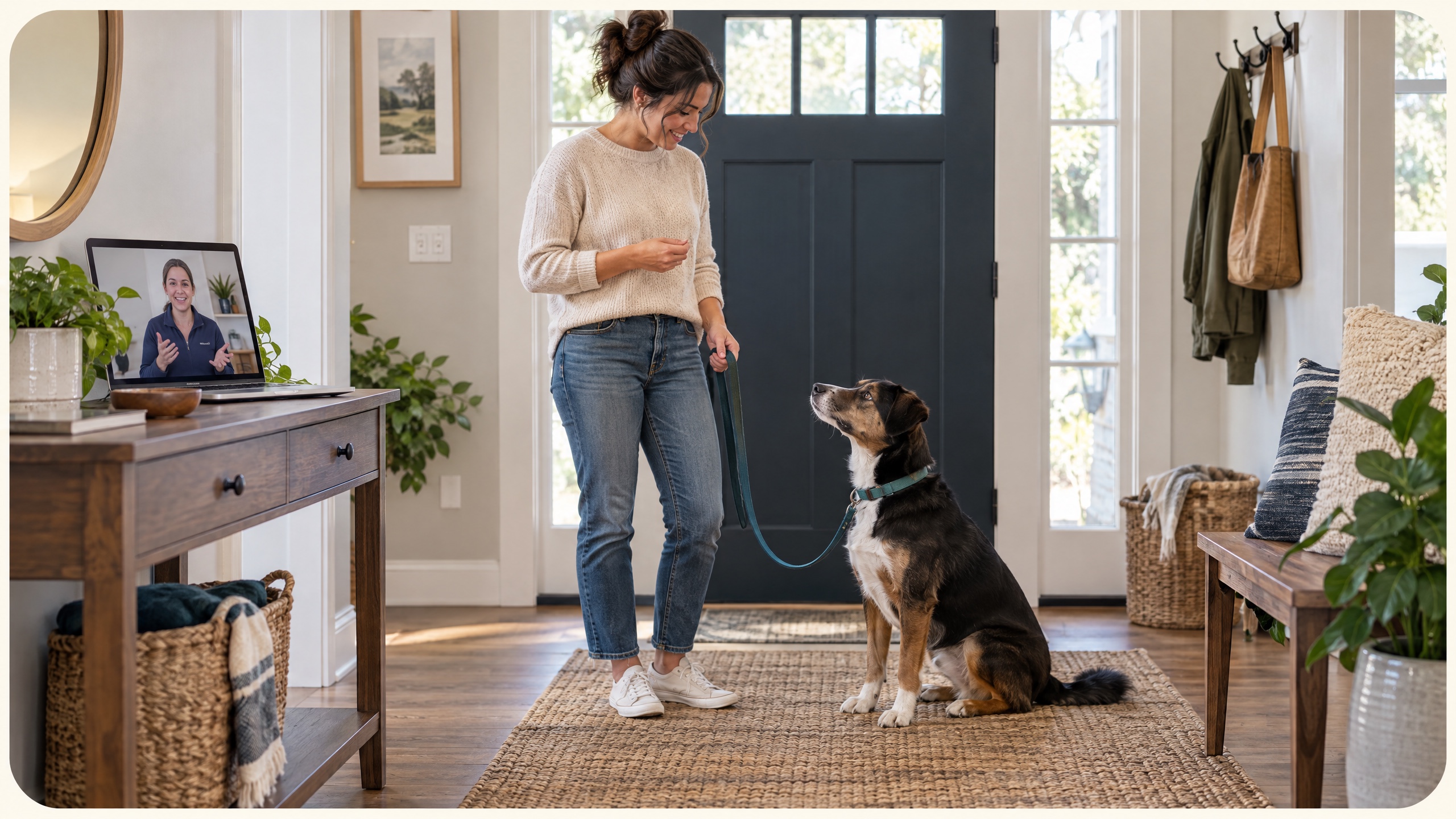
At the Virtual dog trainers we emphasize understanding each dog’s triggers, preventing repeated unwanted behavior, and using clear communication, rewards, and carefully set-up practice. The Virtual Dog Trainer brings that coaching online, with live sessions and feedback so owners can work on the behavior in their own home. The right plan depends on your dog; a one-size-fits-all “just put them on a mat” answer may miss what is driving the barking.
When to Consider The Virtual Dog Trainer Instead
If you are tired of managing your dog’s bad behavior and want to actually fix it, The Virtual Dog Trainer is the stronger choice. Here is why owners choose us when they need real results:
1. We Use a Balanced Training Philosophy
We advocate for a balanced training philosophy: using flat collars, slip leashes, and properly fitted prong collars to communicate clearly. We believe in fair, timely corrections paired with high-value rewards. Correcting without redirecting is like telling someone they are going the wrong way without telling them which way is right. Your dog needs to know exactly what “No” means, just as much as they need to know what “Yes” means. Clear boundaries are what keep your dog safe.
2. Direct, Personalized Coaching
We don’t just hand you a video and wish you luck. The Virtual Dog Trainer offers personalized coaching and direct support. We provide the real-time feedback you need to get your timing and mechanics right the first time — not three weeks and a frustrated dog later.
3. Immediate Access to Solutions
We give you the tools you need right now to address the behaviors that are disrupting your life. We prioritize the problems that matter most to you first, rather than forcing you to wait for a module to unlock.
4. Built for Real-World Obedience
K9TI’s service dog precision requires immense, consistent repetition that works best for dogs that are already relatively calm. The Virtual Dog Trainer is explicitly built for everyday dog owners who want a dog they can take to a brewery, a park, or a family gathering without incident. We focus on practical obedience: loose leash walking, coming when called reliably, and staying calmly on a place cot.
Struggling to get your dog to listen?
If you are tired of guessing your way through training and want a clear, customized roadmap, it might be time to step away from the pre-recorded videos. Check out our online dog training courses to see how live, personalized coaching can actually change your dog’s behavior.
Or click the button below to schedule a Free Transformation call today!
Take the next step toward calmer arrivals
You do not have to keep avoiding guests or hoping the next knock goes better. Learn what is setting your dog off, build a clear routine, and practice it in manageable steps until it works in real life. Call 347-921-3376 to talk with The Virtual Dog Trainer about the barking and find out what support fits your dog
People Also Ask: door barking FAQs
How do I stop my dog barking at the door?
Start with your dog on leash or behind a barrier so they cannot rush the entrance. Teach them to check in and wait with the door closed, then add door sounds and visitors gradually while rewarding the response you want.
Why does my dog bark at guests?
Dogs may bark because they are excited, uncertain, or trying to make a person move away. Notice the exact trigger and what happens after the barking so your training plan addresses the pattern, not just the noise.
What should I do when my dog barks at visitors?
Keep the dog safely under control and ask visitors to stay neutral. Create more distance if your dog cannot respond, then restart with an easier step instead of forcing a greeting.
Is there a dog trainer near me who can help with barking at the door?
Look for a trainer who will assess your dog’s triggers and coach you through controlled practice. The Virtual dog trainer is able to guide no matter where you are located.
Can I find an online dog trainer near me for door barking?
Yes. Online coaching can help you practice in the actual doorway and get feedback on your handling. The Virtual Dog Trainer works remotely, so support is not limited to your immediate neighborhood.