
Key Takeaways
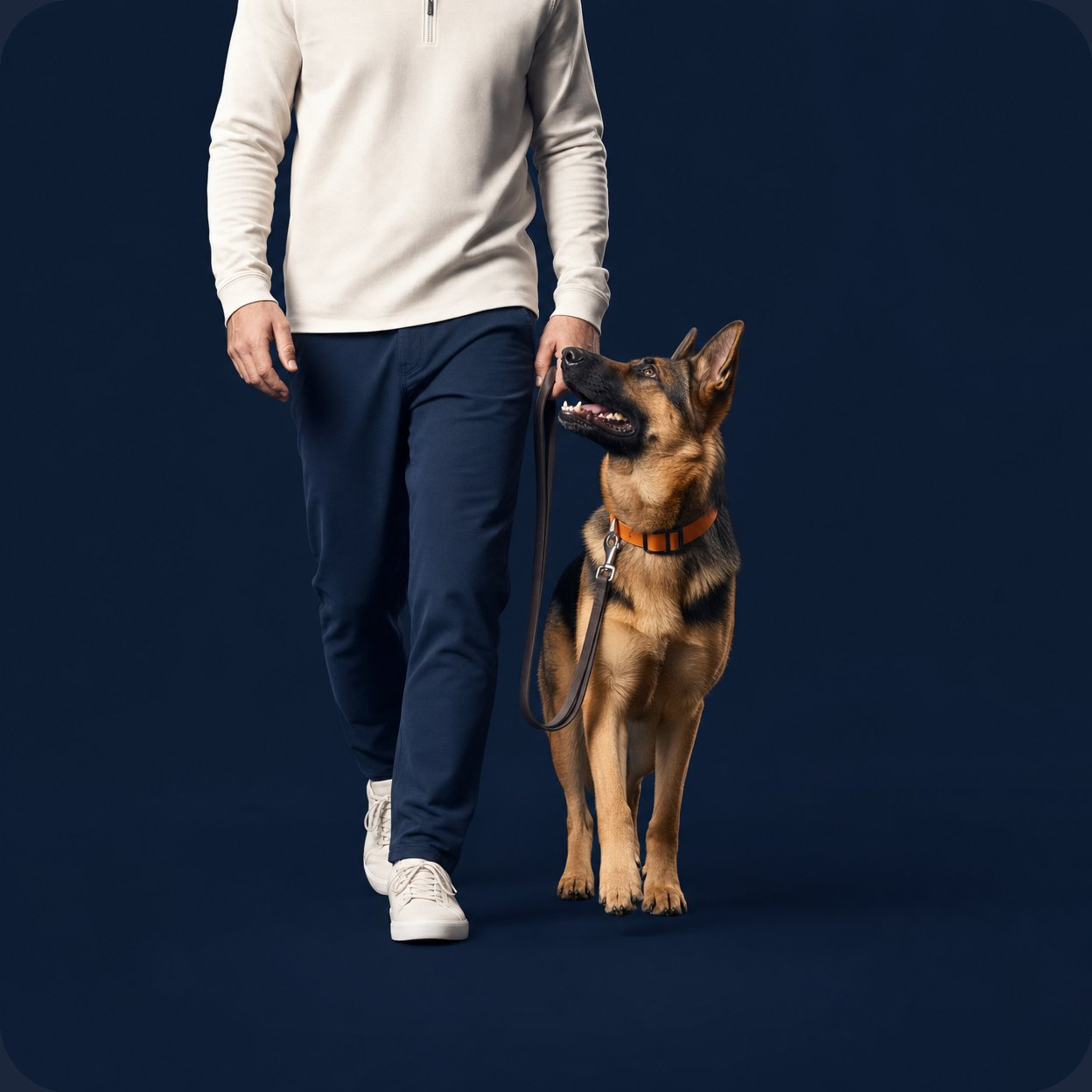
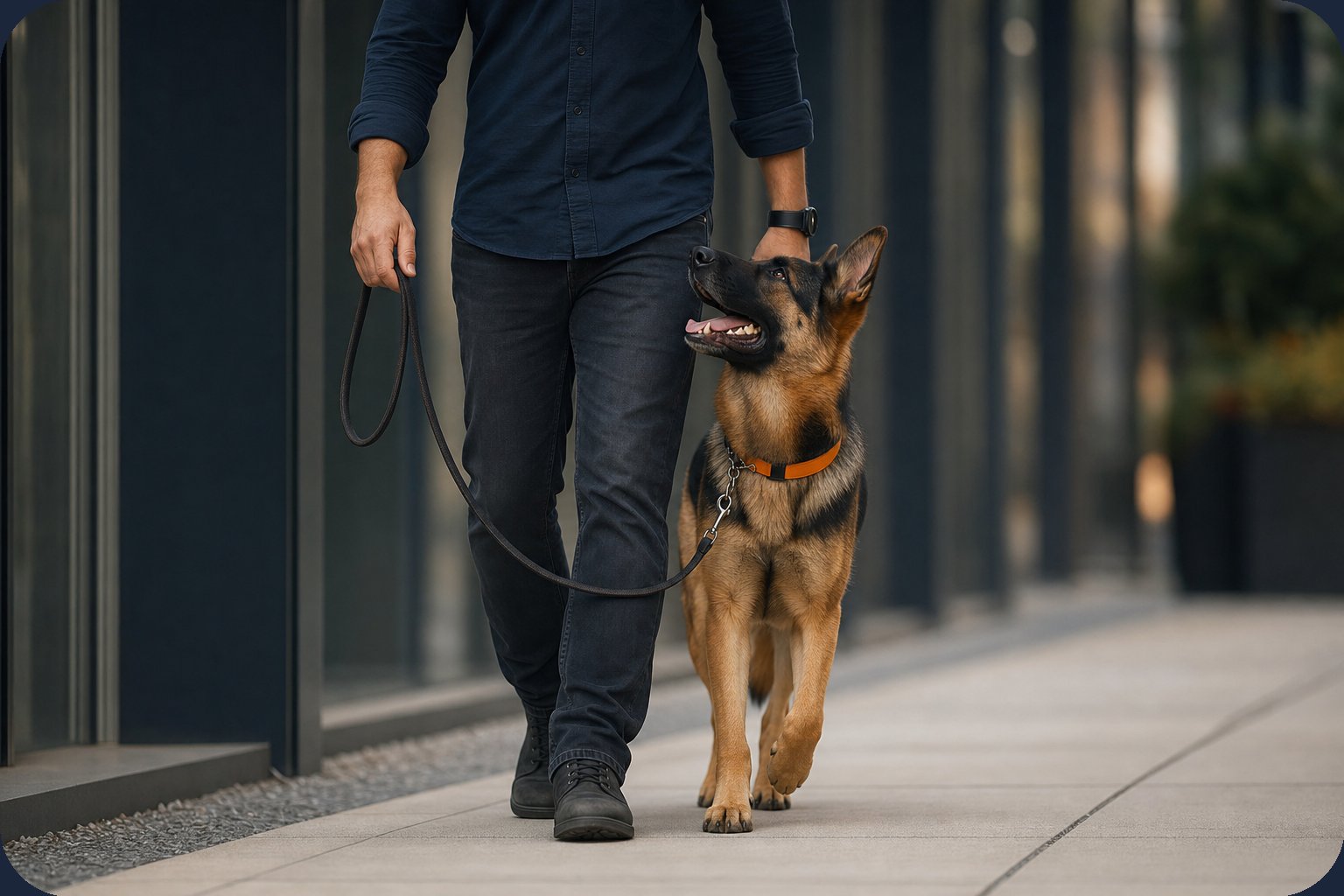
- The “heel” command is a strict, formal position where the dog walks parallel to your leg with no sniffing or pulling, which is entirely different from casual loose leash walking.
- Back-clip harnesses encourage pulling; for effective heel training, use a slip leash or prong collar to provide clear, fair communication and corrections.
- A balanced training approach requires rewarding the dog when they are in the correct position and using a quick pop-and-release correction when they attempt to break the heel.
What Does “Heel” Actually Mean?
Heel vs. Loose Leash Walking
Feature
The "Heel" Command
Loose Leash Walking
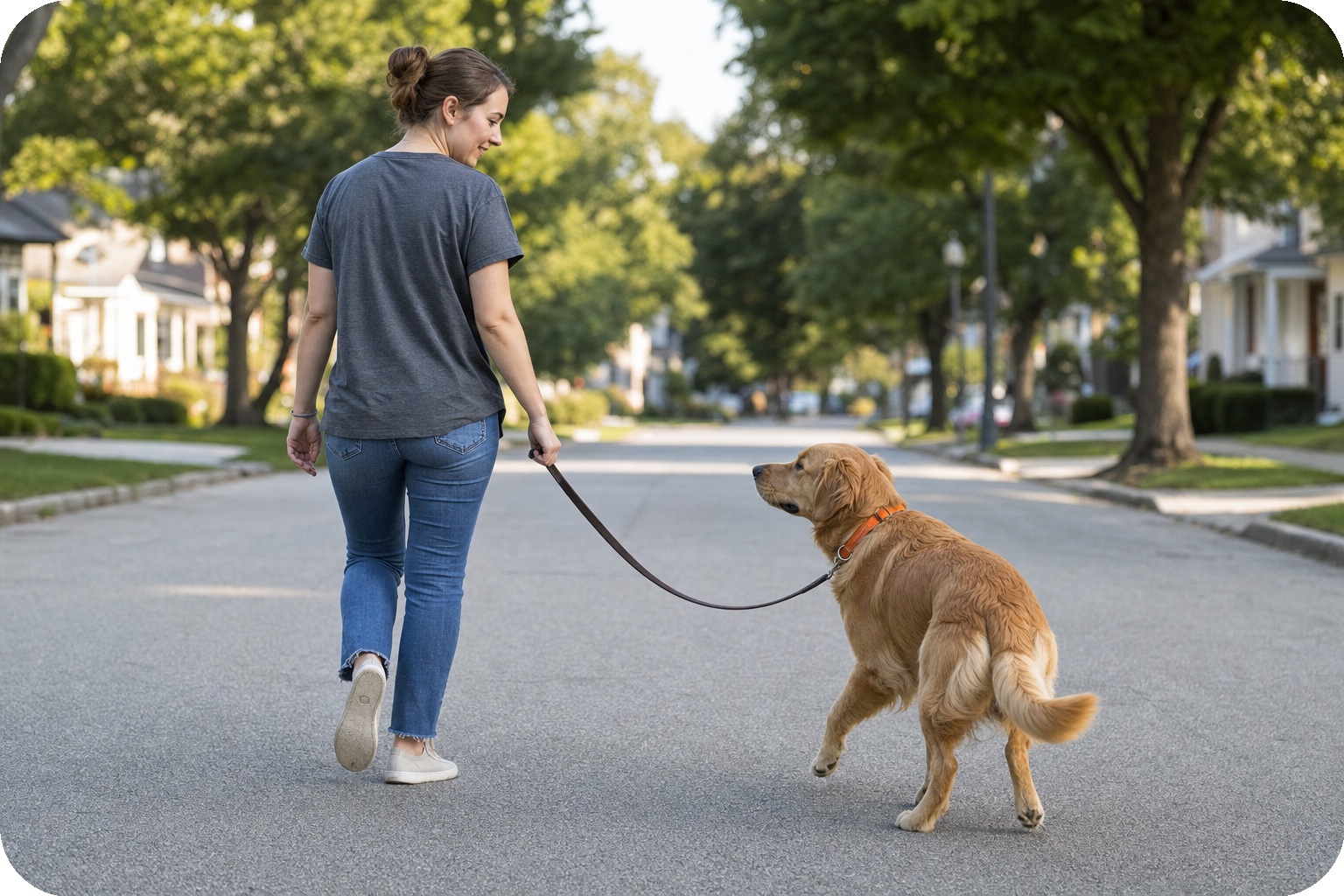
Think of “heel” as a military march, and “loose leash walking” as a casual stroll through the park. You do not need your dog in a strict heel for a 45-minute walk—that is exhausting for both of you. But you absolutely need a reliable heel command when you are navigating a crowded sidewalk or passing a reactive dog.
The Best Equipment for Teaching a Dog to Heel
1. The Slip Leash
2. The Prong Collar
3. The Flat Collar
Step-by-Step: How to Teach a Dog to Heel
Step 1: The Lure and Reward
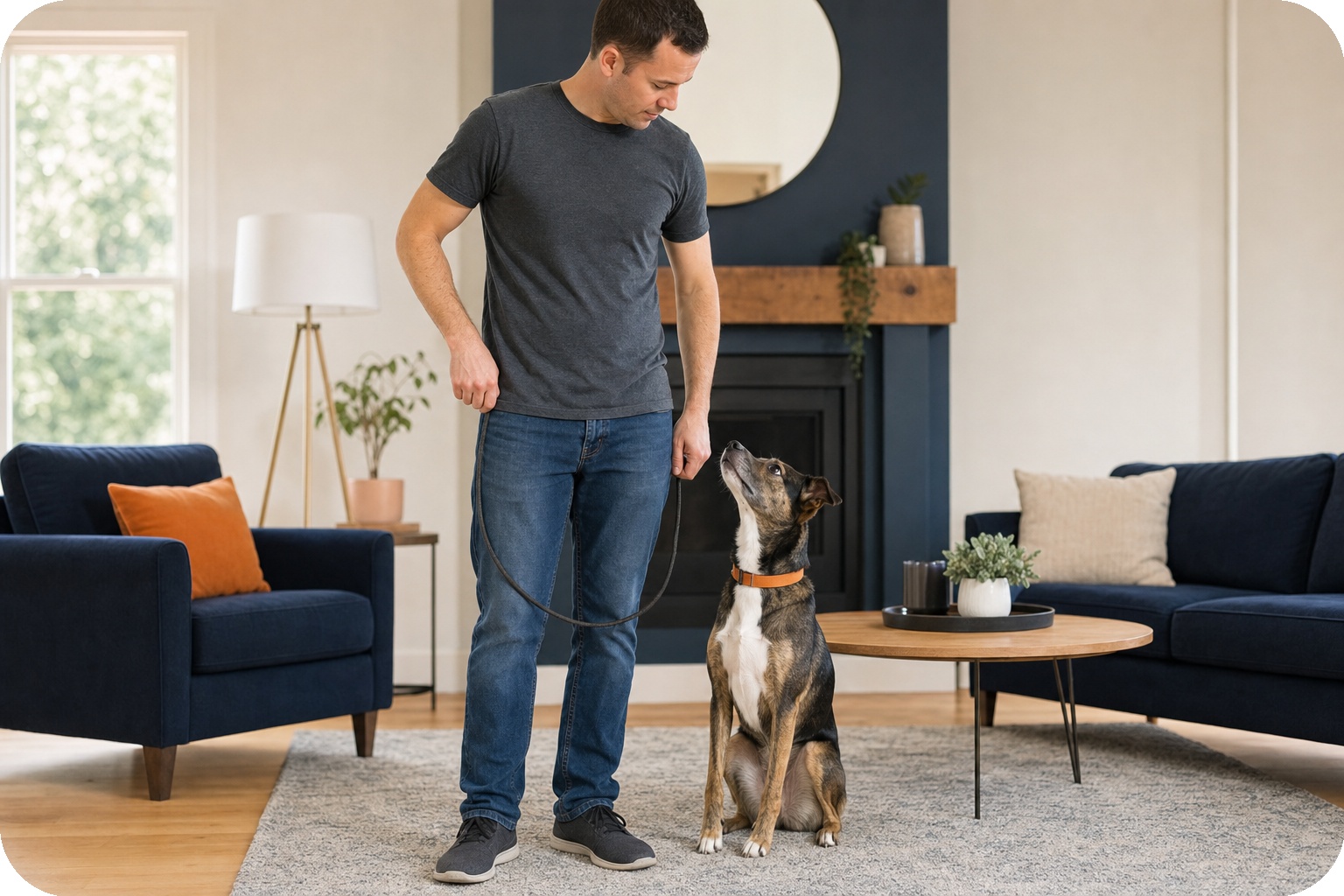
- Put your dog on a leash and hold the leash in your right hand.
- Hold a treat in your left hand, right at your dog’s nose level.
- Say your dog’s name, say “Heel,” and start walking forward.
- Keep the treat right at your leg. As your dog walks in the correct position, praise them (“Good heel!”) and give them a small piece of the treat every few steps.
Step 2: Fading the Lure
- Put the treats in your pocket or a treat pouch.
- Say “Heel” and start walking with your hands in a natural position.
- If your dog stays in the heel position, reach into your pocket, pull out a treat, and reward them.
- If they forge ahead or lag behind, stop walking. Wait for them to return to the heel position, then resume.
Step 3: Introducing the Correction
- Walk your dog in the heel position.
- When they inevitably try to forge ahead and break the heel, do not pull them back in a slow, steady tug-of-war.
- Instead, give a quick, firm “pop and release” on the slip leash or prong collar. The leash should be loose, pop tight for a fraction of a second, and immediately go loose again.
- The moment they return to the heel position, praise them (“Good heel!”).
Step 4: Adding Turns and Pace Changes
- The U-Turn: If your dog is forging ahead, abruptly turn 180 degrees and walk the other way. If they hit the end of the leash, give a pop-and-release correction and keep walking. They will quickly learn that they need to watch your legs to know where you are going.
- Pace Changes: Speed up into a jog, then suddenly slow down to a crawl. Your dog should adjust their speed to match yours.
- The Auto-Sit: When you come to a complete stop, your dog should automatically sit in the heel position. If they do not, gently pull up on the leash and push down on their hindquarters until they sit. Reward them when they do.
Common Mistakes When Teaching the Heel Command
1. The Tight Leash Trap
2. Repeating the Command
3. Moving Too Fast
Can You Teach an Older Dog to Heel?
Ready to Train your Dog?
Click the button below to schedule a call today!
Frequently Asked Questions (FAQ)
What does “heel” mean for a dog?
The heel command means the dog must walk parallel to your leg, matching your pace exactly, without sniffing, pulling, or lagging behind. It is a strict, formal position used for navigating distracting or crowded environments.
Which side should a dog heel on?
How long does it take to teach a dog to heel?
Should I use a leash to teach heel?
Yes, absolutely. A leash is your primary communication tool. You cannot enforce the heel position or provide fair corrections without a leash. Off-leash heeling is an advanced skill that should only be attempted after the dog is 100% reliable on-leash.
Can you teach an older dog to heel?
Yes. Older dogs are fully capable of learning the heel command. The training process is the same, though you may need to be more consistent with your corrections to break years of bad pulling habits.
What is the difference between heel and loose leash walking?
How do I get my dog to stop pulling and heel?
Stop using a harness, switch to a slip leash or prong collar, and use a balanced approach. Reward the dog when they are in the correct position, and use a quick pop-and-release correction when they attempt to pull ahead.
What equipment is best for teaching a dog to heel?
We recommend a slip leash or a prong collar for teaching the heel command. These tools allow for clear, precise communication and fair corrections, unlike flat collars or back-clip harnesses which encourage pulling.