
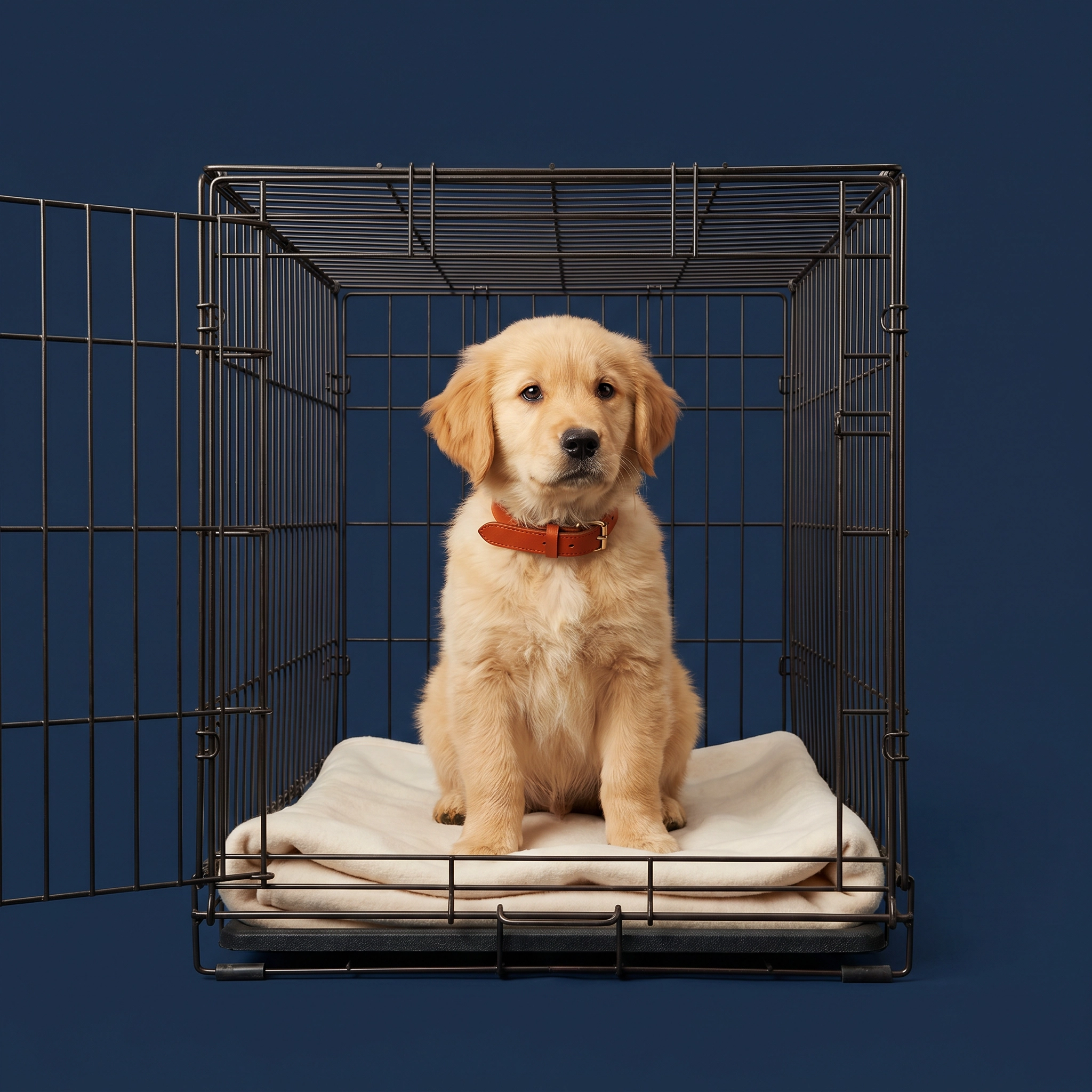
Key Takeaways
- Management is Crucial: The crate prevents bad habits like chewing inappropriate objects and having potty accidents when you cannot supervise.
- Age Dictates Bladder Control: An 8-week-old puppy can only hold it for 1 to 2 hours during the day. Adjust your schedule based on their age.
- Do Not Reward Whining: If all needs are met, ignore the crying. Letting them out teaches them that crying opens the door.
Why Your Puppy Needs a Crate Schedule
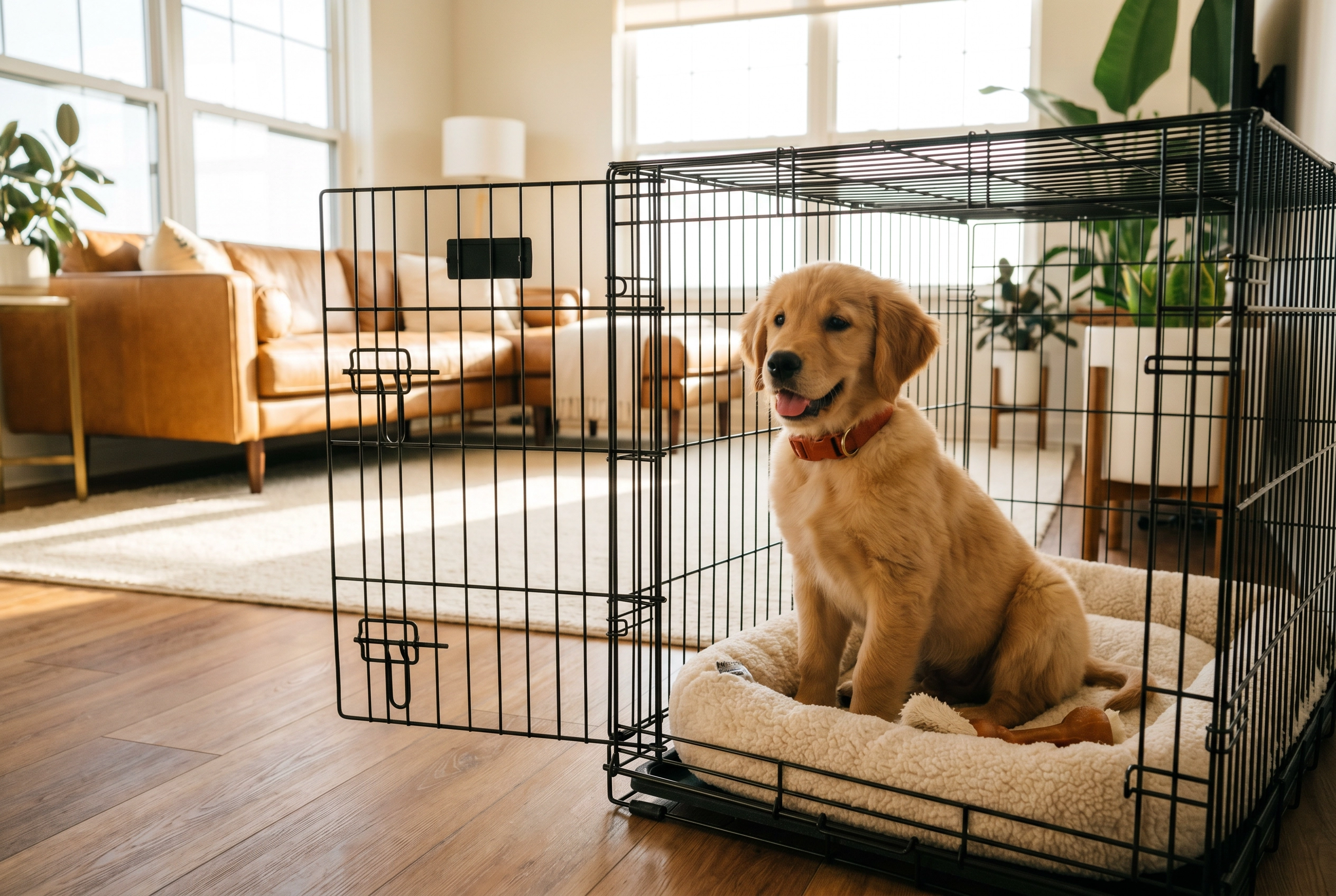
The 1-Up, 2-Down Rule
Age-by-Age Potty and Crate Guidelines
Puppy Age
Max Crate Time
Nighttime Potty Breaks Needed
Remember, these are maximums. If your puppy is awake and playing, they will need to go potty much more frequently — sometimes every 20 to 30 minutes.
Sample Daily Puppy Crate Training Schedule
Time
Activity
Crate Training Schedule for Working Owners
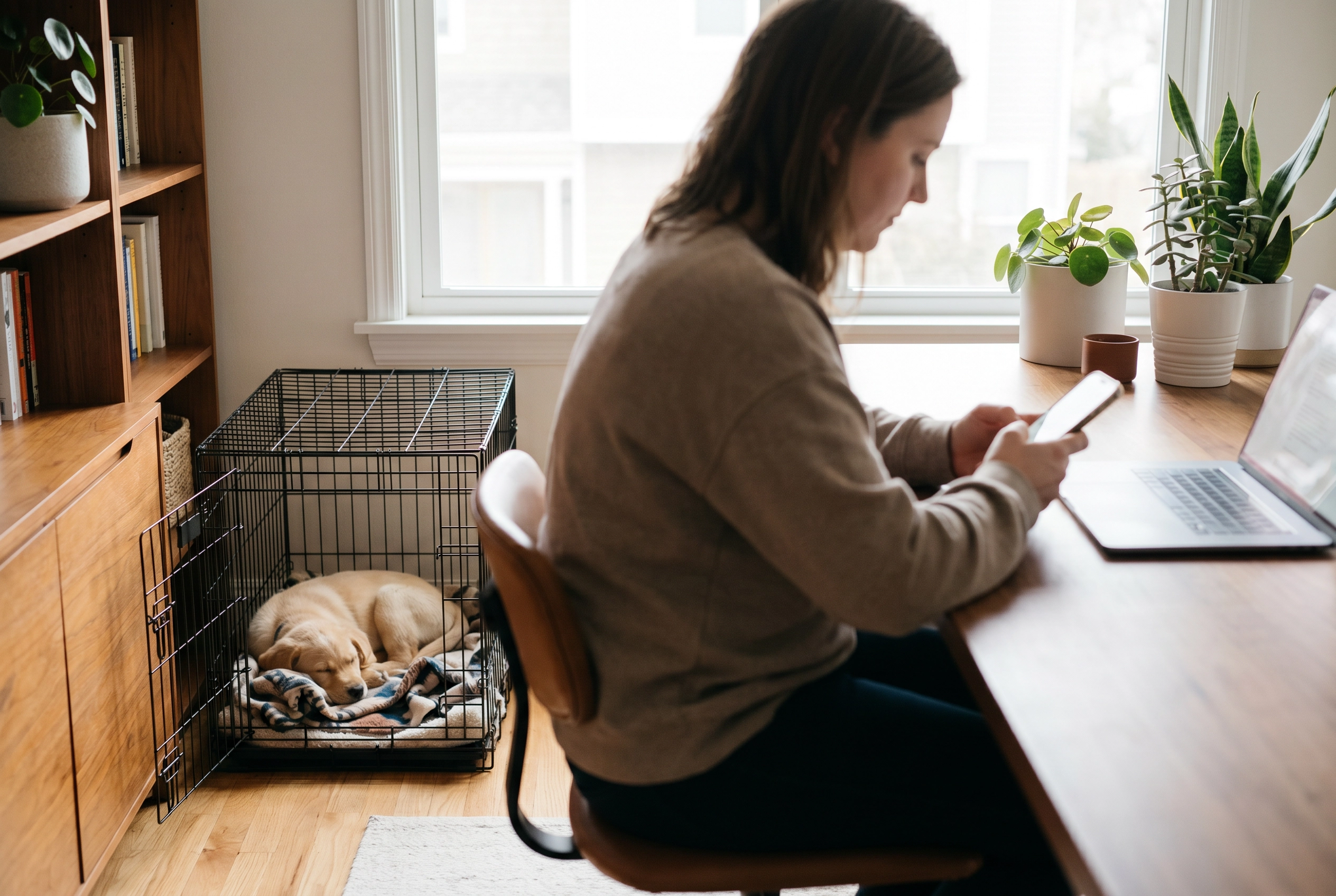
If you work outside the home, your puppy crate training schedule will look a bit different. You cannot leave a young puppy in a crate for eight hours straight.
Time
Activity
If you cannot come home at lunch, you must hire a dog walker or ask a neighbor to help. A puppy left in a crate too long will be forced to soil their space, which ruins the entire potty training process.
Ready to Train your Puppy?
Click the button below to schedule a call today!
Handling the Nighttime Routine
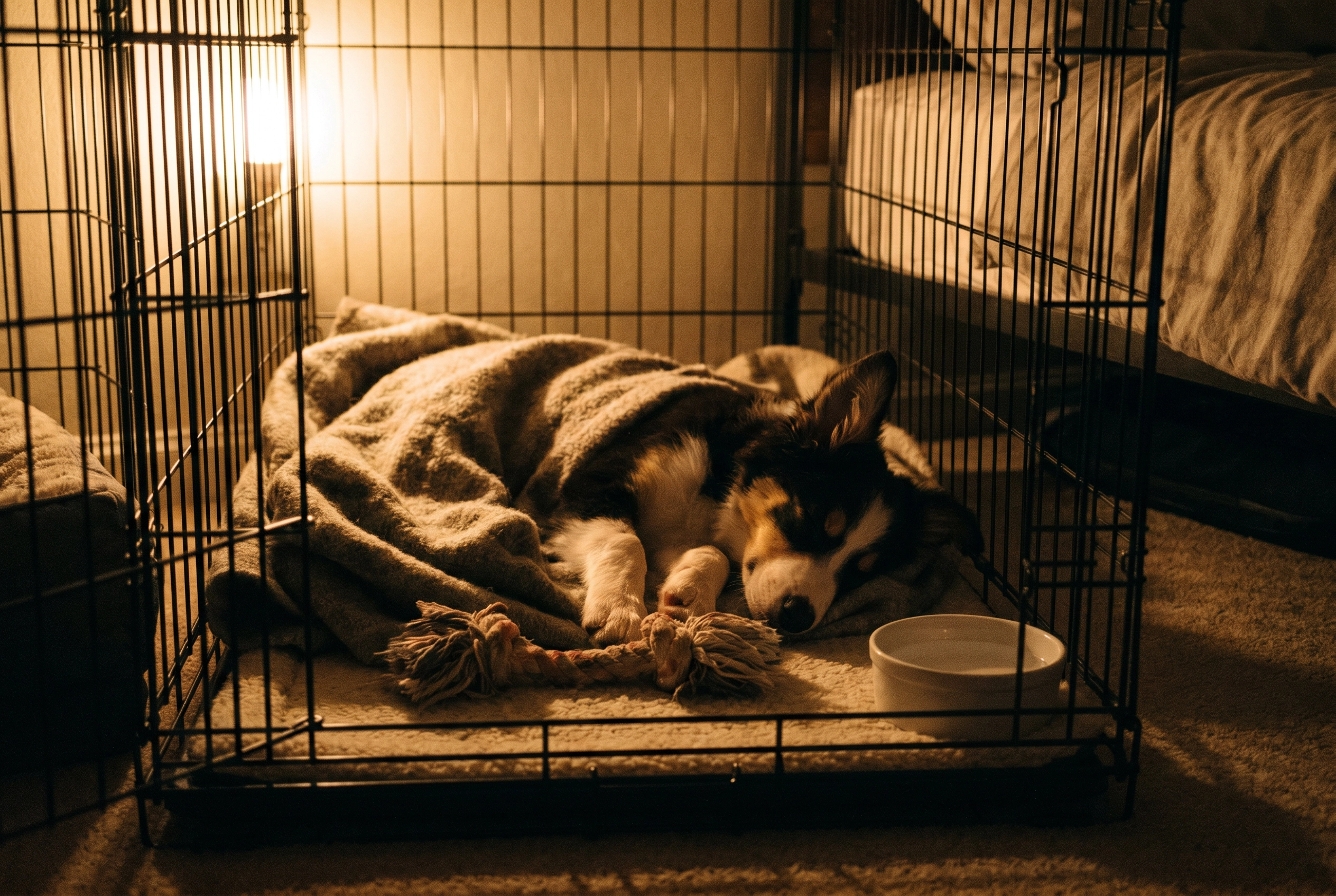
Nighttime can be the most stressful part of crate training. Your puppy is used to sleeping in a pile with their littermates, and now they are alone.
What to Do When Your Puppy Cries
The Overtired Puppy: A Major Red Flag
People Also Ask (FAQ)
What is the 10-10-10 rule for puppies?
The 10-10-10 rule is a guideline for socialization. It suggests exposing your puppy to 10 new people, 10 new places, and 10 new sounds every week to build confidence.
What is a good crate training schedule for puppies?
A good schedule alternates one hour of awake time (potty, play, train) with two hours of crate rest. This ensures they get the 16-20 hours of sleep they need.
What is the 3-3-3 rule for puppies?
The 3-3-3 rule explains the adjustment period for a new dog: 3 days to decompress, 3 weeks to learn the routine, and 3 months to feel completely at home.
What is a red flag puppy’s behavior?
Red flag behaviors include excessive resource guarding, extreme fearfulness that does not improve, or aggressive biting that goes beyond normal puppy teething.
How long should a puppy be in a crate during the day?
Should I put my puppy in a crate at night?
Yes, putting your puppy in a crate at night keeps them safe, prevents destructive chewing, and is the most effective way to potty train them.
How do I stop my puppy from crying in the crate?
Ensure all their needs are met (potty, food, exercise). If they are just protesting, ignore the crying. You can also use a firm “No” to interrupt the whining, rewarding them when they are quiet.
At what age should a puppy sleep through the night without a crate break?
Most puppies can sleep through the night (about 6 to 8 hours) without needing a potty break by the time they are 4 to 5 months old