
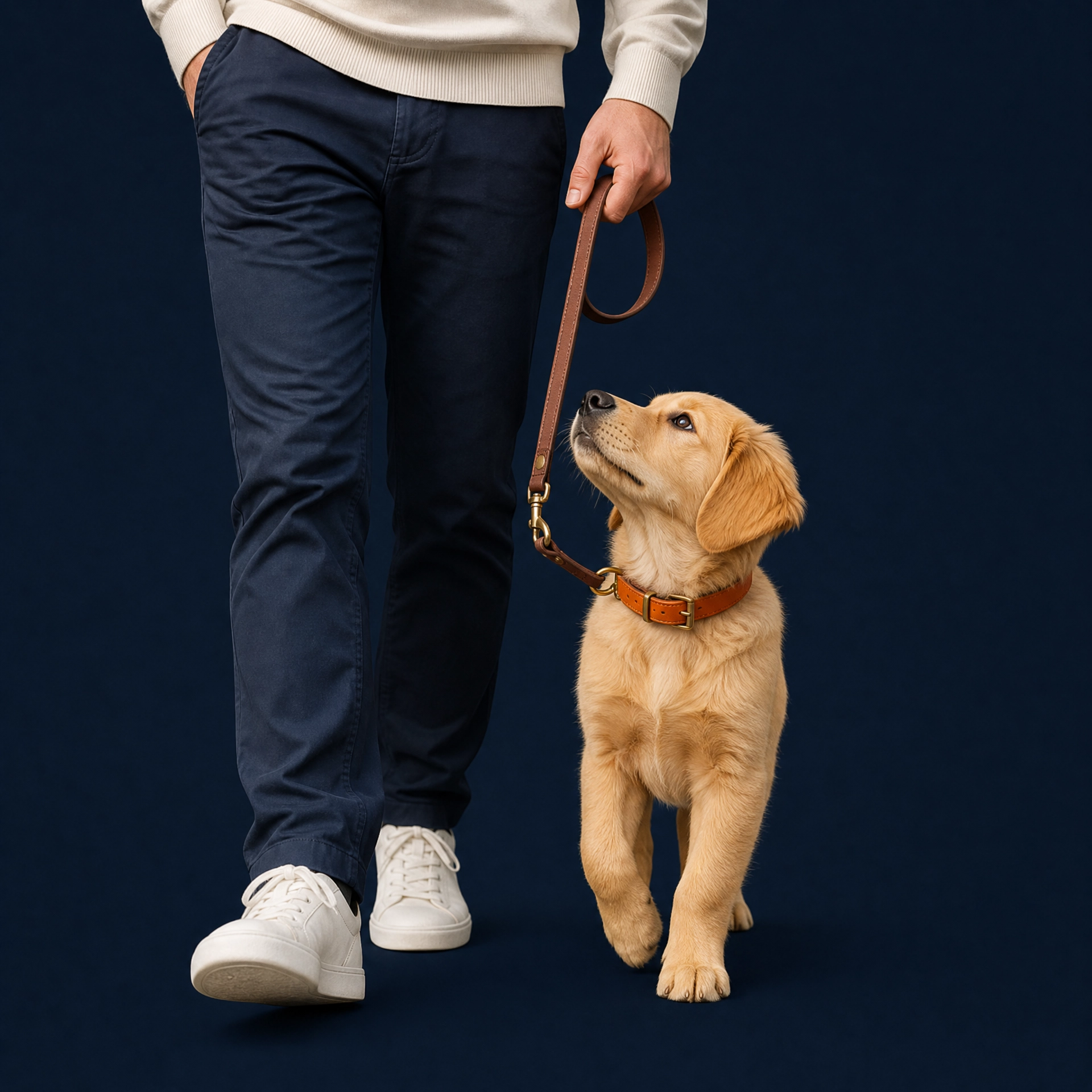
Key Takeaways
- Start leash training indoors with high-value treats to build positive associations before facing outdoor distractions.
- Use the “stop and go” method: if your puppy pulls, stop moving immediately and only proceed when the leash is loose.
- Reward your puppy for walking on a loose-leash or checking in with you
How to Train Puppy to Walk on Leash: A Complete Guide
If you’re wondering how to train puppy to walk on leash without losing your mind (or your shoulder socket), you’re not alone. The secret is simple: start in a low-distraction environment, use high-value rewards to reinforce walking by your side, and stop moving immediately if they pull.
Right now, your puppy probably thinks the leash is either a fun chew toy or a medieval torture device designed to ruin their fun. We’ve all been there. You imagine a peaceful stroll through the neighborhood, but reality looks more like a frantic game of tug-of-war mixed with sudden, stubborn sit-downs.
In this guide, we’ll cover exactly how to teach your puppy to walk politely on a loose leash, what gear you actually need, and how to troubleshoot common issues like the dreaded “puppy freeze” or leash biting.
The Right Gear Makes All the Difference
Before we even take a step, let’s talk about equipment. You wouldn’t run a marathon in flip-flops, and you shouldn’t try to leash train a puppy with the wrong gear.
What you need:
- A standard 4-foot or 6-foot leash.
- A Harness, flat collar, or slip leash.
- High-value treats (think hot dogs, cheese, or boiled chicken—kibble won’t cut it when a squirrel is involved).
What to avoid:
- Retractable leashes. These actually teach your dog to pull by rewarding them with more freedom when they put tension on the line. Plus, they offer zero control. A better alternative is a long line
- Front-clip harnesses. While popular, they don’t teach the dog how to walk; they just mechanically restrict movement and can alter your puppy’s natural gait.
Step 1: Start Indoors (Where You Are the Most Exciting Thing)
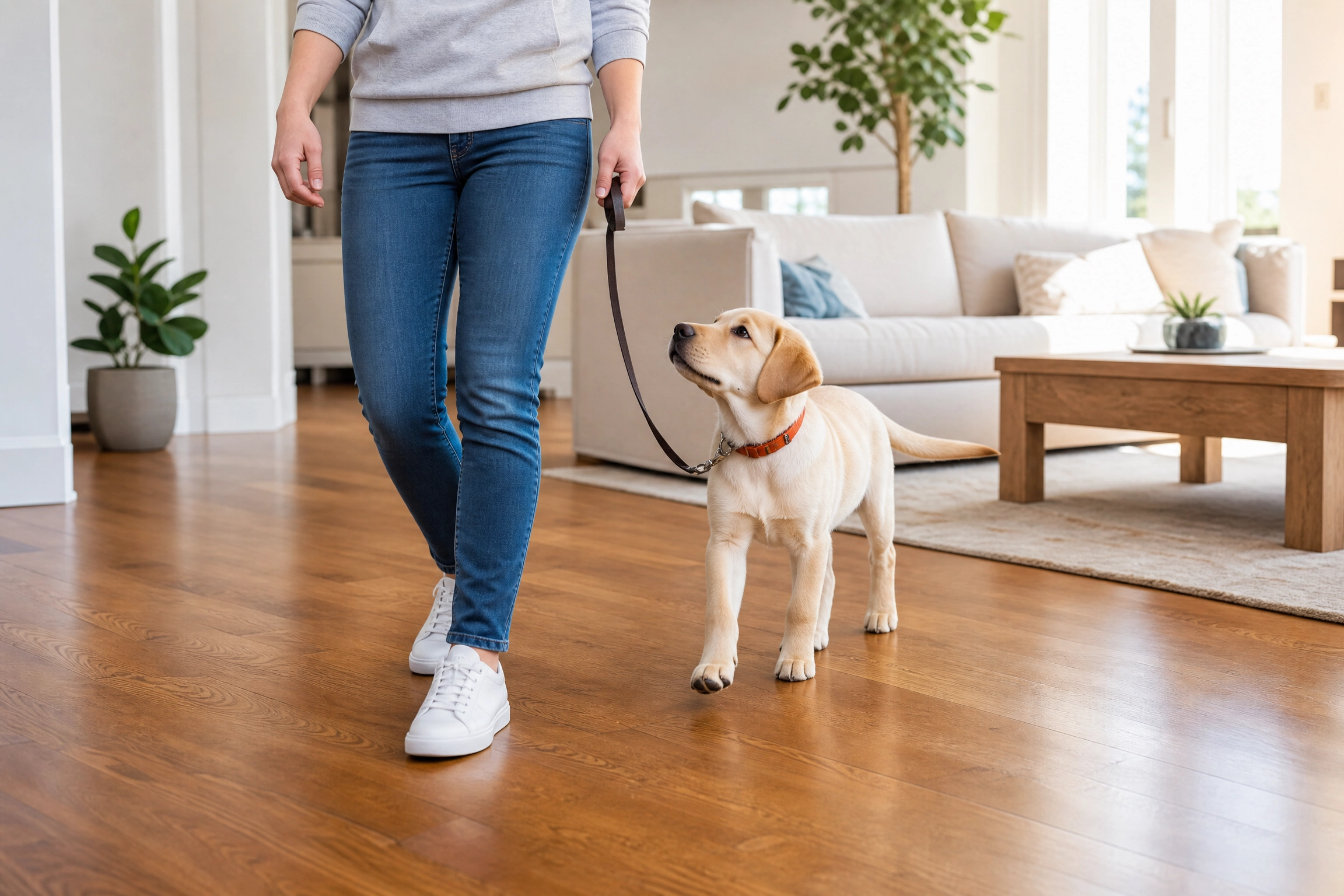
Don’t start your training outside where there are birds, cars, and interesting smells. Start in your living room or hallway.
Attach the leash to your puppy’s collar and let them drag it around for a few minutes while supervised. This helps them get used to the feeling of it without any pressure.
Next, pick up the leash. Hold some high-value treats in the hand closest to your dog (usually the left side). Take a few steps, and when your puppy follows you, praise them enthusiastically and give them a treat right at your pant seam.
Step 2: The “Stop and Go” Method for Pulling
Eventually, your puppy will pull ahead. When they do, you must become a tree.
Stop walking immediately. Do not yank them back, but do not take another step forward.
Wait for your puppy to release the tension on the leash—they might look back at you or take a step toward you. The second that leash goes slack, praise them, call them back to your side, reward them, and start walking again.
If you let them pull you forward even an inch, they learn that pulling gets them what they want. It’s bribery, pure and simple—and it works beautifully.
Step 3: Dealing with the “Puppy Freeze”
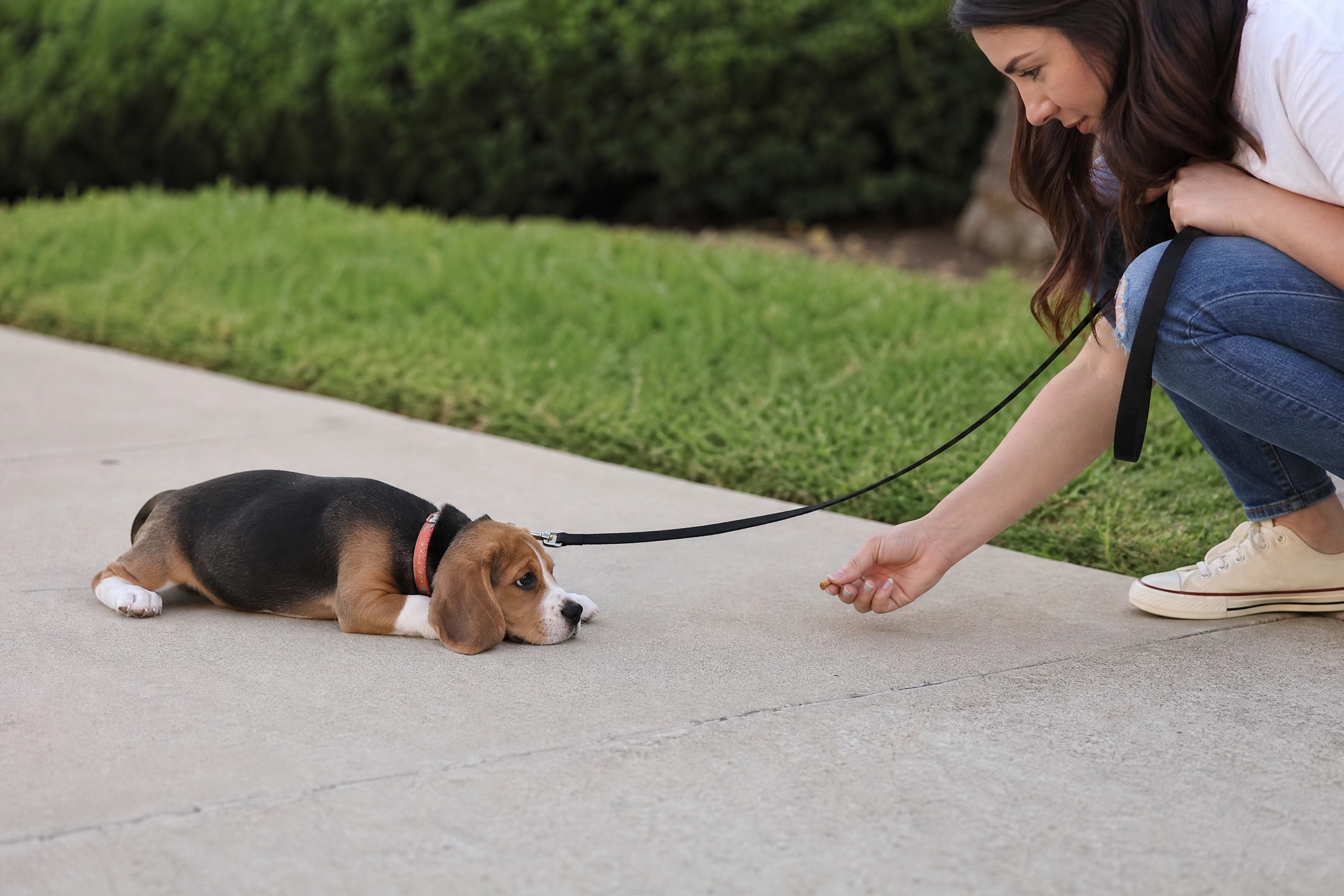
Sometimes, puppies do the exact opposite of pulling. They hit the end of the leash, dig their heels in, and refuse to move. It’s like a toddler throwing a tantrum in the grocery store checkout line—loud, embarrassing, and completely convinced the world is ending.
If your puppy freezes and stops on the walk:
- Do not drag them.
- Put a tiny bit of gentle pressure on the leash while excitedly waving a treat or a toy.
- When they take even one step toward you to relieve the pressure, praise heavily and reward.
You are teaching them that giving in to leash pressure results in good things, not scary things.
Struggling to get your puppy to focus?
If your puppy is easily distracted or just isn’t getting it, sometimes you need a professional eye. The Virtual Dog Trainer offers online puppy training programs that guide you step-by-step through these foundational skills. You get expert advice without ever leaving your house.
Click the button below to schedule a call today!
Step 4: Correcting Leash Biting and Chewing
Puppies explore the world with their mouths, and a dangling leash looks like a fantastic tug toy.
If your puppy starts biting the leash, stop moving. Give a firm, calm “No,” and use a fair correction if necessary (a quick, gentle pop on the collar to interrupt the behavior), immediately followed by redirecting their attention to a command they know, like “Sit.” When they sit and leave the leash alone, reward them.
Correcting without redirecting is like telling someone they are going the wrong way without telling them which way is right. Always show them what you want them to do instead.
Step 5: Taking It Outside
Once your puppy is a pro in the living room, move to the backyard. Then the driveway. Then the sidewalk right in front of your house.
Increase the level of distraction slowly. If your puppy starts pulling wildly or completely ignoring you, you’ve moved too fast. Take a step back to an easier environment. You have to be more exciting than a squirrel—which, I will admit, is a tall order.
Age-Specific Expectations: What to Expect
- 8-10 Weeks: Attention spans are incredibly short. Keep sessions to 2-3 minutes. Focus purely on following you for treats indoors.
- 12-16 Weeks: They are gaining confidence and getting easily distracted. This is when the “stop and go” method becomes crucial.
- 4-6 Months: They are stronger and testing boundaries. Consistency is key here. If you let them pull now, you will have a 70-pound adult dog dragging you down the street later.
Frequently Asked Questions (People Also Ask)
How do I leash train a puppy?
Start in a quiet, indoor space. Use high-value treats to reward your puppy for walking by your side. If they pull, stop moving immediately and wait for them to release the tension before continuing.
Why won’t my puppy walk on a leash?
Puppies often refuse to walk because they are scared of the collar pressure or overwhelmed by the environment. Use treats to lure them forward and practice indoors where they feel safe before trying outside.
How do I stop my puppy from pulling on the lead?
The moment the leash gets tight, stop walking. Do not move forward until the puppy loosens the tension. Reward them when they return to your side. Consistency is the only way to stop pulling.
How do I teach my dog to walk on a leash?
Teach your dog to walk on a leash by rewarding them for staying in the “heel” position. Use a flat collar or prong collar for clear communication, and never use a retractable leash.
learn more about how to teach your dog to heel
How to stop puppy from biting leash?
If your puppy bites the leash, stop moving and say “No.” Interrupt the behavior, then redirect them to a “Sit.” Reward them as soon as they stop biting and comply with the command.
How to leash train a puppy at 8 weeks?
At 8 weeks old, keep sessions under 3 minutes. Let them drag a lightweight leash indoors to get used to the feeling, then practice having them follow you around the house for treats.
Is there a dog trainer near me that does online sessions?
Yes! The Virtual Dog Trainer offers comprehensive online dog training and puppy training programs accessible from anywhere, providing expert guidance right in your living room.
How much does virtual dog training cost near me?
Virtual dog training is often more affordable and flexible than traditional in-person training. Contact The Virtual Dog Trainer to discuss customized programs that fit your budget and your puppy’s specific needs.
Ready to Enjoy Your Walks?
Leash training takes time, patience, and a lot of hot dogs. Yes, you might look like you forgot your keys for the third time this week as you stop and start constantly down the sidewalk, but your dog will thank you when they can finally go on relaxed, enjoyable walks.
If you’re feeling overwhelmed or your puppy’s pulling is getting out of hand, you don’t have to figure it out alone. At The Virtual Dog Trainer, we specialize in helping owners build clear communication and strong bonds with their dogs through balanced, effective online training.
Stop dreading your daily walks and start enjoying them. Schedule your puppy free transformation call here