
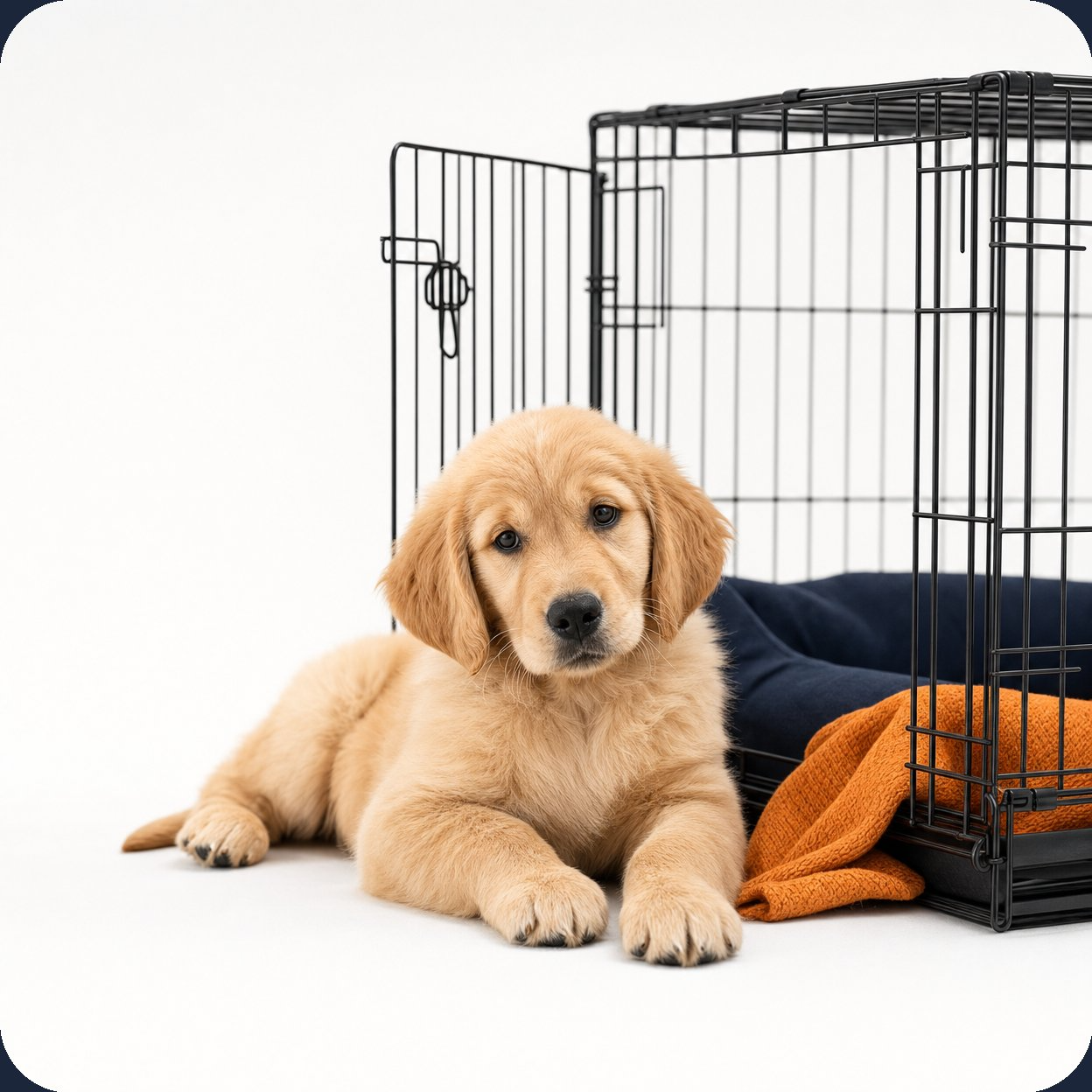
Puppy whining in crate usually means your puppy needs help with potty timing, comfort, sleep, or gradual crate training. Do not let a scared puppy panic for hours. Instead, rule out urgent needs, keep nighttime boring, and teach the crate in small steps so it becomes a safe resting place rather than a tiny jail with a blanket.
Key Takeaways
- Brief fussing can be normal, but panic is not a training plan.
- Most crate whining comes from one of five causes.
- The fastest fix is usually a slower setup, not louder ignoring.
Is It Normal for a Puppy to Whine in the Crate?

Yes, some puppy whining in the crate is normal, especially during the first few nights. Your puppy has just left littermates, familiar smells, and the full-time customer service department known as “Mom.” A crate can feel strange at first.
However, “normal” does not mean you should ignore every sound. PetMD notes that puppies may cry in the crate because they are scared, lonely, uncomfortable, need to potty, or have not yet learned that the crate is safe. That is a very different problem from a puppy casually complaining because room service is late.
The goal is not to create a puppy who never makes noise. The goal is to teach your puppy, “This place is safe, my needs are met, and I can settle here.”
The Three-Minute Crate Whining Triage Rule
Before you decide what to do, use a simple three-minute triage rule. Listen to the type of sound, look at your puppy’s body language, and ask what happened right before the whining started.
If your puppy is...
It probably means..
What to do next
Whimpering softly, then pausing
Mild protest or settling
Wait briefly and reward quiet if possible.
Barking louder and louder
Frustration, fear, or learned attention
Check needs, then reset training at an easier level.
Screaming, drooling, biting bars, or trying to escape
Panic or severe distress
Let the puppy out calmly and rebuild crate comfort gradually.
Whining after sleeping for a while
Potty need
Take a boring potty trip, then return to the crate.
Whining immediately after being crated
Not enough crate training or too much energy
Add a wind-down routine and shorter crate sessions.
A puppy who settles after a minute or two may simply be adjusting. A puppy who escalates is telling you the setup is too hard. Training works best when we listen before the puppy starts auditioning for a haunted house sound effects department.
Why Puppies Whine in the Crate
Puppies whine in the crate because the crate is connected to a need, emotion, or expectation. The sound is communication, even when the translation feels like, “Excuse me, I would like to file a formal complaint with management.”
Your Puppy Needs to Potty
Young puppies have small bladders and limited bladder control. If your puppy wakes up and whines after a stretch of sleep, assume potty first. A puppy who is forced to hold it too long may panic, have accidents, and start associating the crate with stress.
Nighttime potty breaks should be painfully boring. Pick up the puppy, go directly outside or to the potty spot, use minimal talking, praise softly if they go, and return to the crate. This is not the time for interpretive dance, squeaky toys, or a TED Talk about bladder maturity.
Your Puppy Feels Alone or Scared
Many puppies whine because sleeping alone feels unnatural at first. Zigzag’s crate-training guidance recommends keeping the crate near you at night so the puppy can hear and smell you while learning to settle. This does not “spoil” the puppy; it creates security.
A crate beside the bed for the first several nights can reduce panic. Once your puppy sleeps more reliably, you can gradually move the crate farther away if that is your long-term plan.
Your Puppy Has Not Been Trained to Love the Crate
A crate is not automatically comforting just because we bought it from a store and called it “cozy.” Puppies need repeated positive experiences before the crate becomes a den.
If the only time your puppy enters the crate is when the fun ends, whining makes perfect sense. The crate becomes the puppy version of being sent to a boring meeting with no snacks.
Your Puppy Is Overtired
Overtired puppies can act like tiny gremlins with fur. They bite more, whine more, resist sleep, and behave as if bedtime is a legal violation.
A predictable nap schedule helps. If your puppy has been awake for too long, crate whining may mean the puppy is exhausted but cannot settle without help. Calm routines, dim lighting, and a safe chew can make the transition easier.
Your Puppy Learned That Whining Opens the Door
Sometimes puppies whine because it has worked before. If every squeak immediately opens the crate, your puppy may learn that whining is the doorbell.
This does not mean you should ignore distress. It means you need to distinguish panic from demand whining and teach quiet behavior carefully. Wait for even one second of quiet before opening the door when it is safe to do so.

Should You Ignore a Puppy Crying in the Crate?
You should not ignore intense puppy crying in the crate, especially if the puppy sounds panicked or may need to potty. You can briefly wait through mild protest whining, but escalating distress means the training step is too difficult.
This is where a lot of owners get stuck. One article says “never let them cry,” another says “ignore it or they win,” and suddenly you are standing in your pajamas at 2:13 a.m. negotiating with a seven-pound land shark.
The balanced answer is simple. Do not reward demand whining, but do not abandon a distressed puppy. Meet real needs, prevent rehearsal of screaming, and then train the crate more gradually during the day.
In short yes and no ignore if your puppy is demanding to be let out and yes you do want to let them out if your puppy seems like they need to go potty or are extremely stress and displaying involuntary behaviors.
Type of whining
Should you respond?
Best response
Mild fussing for 30–90 seconds
No
Wait for your puppy to remain quite and settle down, - then let out if appropriate.
Whining after a nap
Yes
Take a boring potty break.
Escalating panic
Yes
Calmly let the puppy out, reduce difficulty (short duration), and restart training.
Whining after sleeping for a while
Potty need
Take a boring potty trip, then return to the crate.
Barking because you walked away.
Train it
Practice short departures and returns - easy come, easy go
Whining after needs are met
Carefully
Wait for quiet, interrupt any barking, (shake crate) then let out when calm and quite rather than noise.
How to Stop Puppy Whining in the Crate
Stopping crate whining is not one magic trick. It is a sequence: meet the puppy’s needs, make the crate feel safe, reward quiet, and build duration slowly.
Step 1: Put the Crate in the Right Place
For nighttime, start with the crate in your bedroom or close enough that your puppy knows you exist. A scared puppy settles faster when they are not isolated from the family on night one.
During the day, place the crate where normal life happens, not in a forgotten corner of the house that feels like a witness protection program. Your puppy should experience the crate while people are around, calm, and predictable.
Step 2: Make the Crate Comfortable but Not Overstimulating
Use safe bedding if your puppy does not chew or shred it. Add a safe chew or food-stuffed toy when supervised. Make sure the room is not too hot, too cold, too bright, or too loud.
Dunnellon Animal Hospital’s crate-training advice emphasizes comfort, proper crate size, exercise, and potty breaks as part of reducing whining. Those basics matter because a puppy cannot relax if the setup is uncomfortable.
Step 3: Feed Meals in the Crate
Put meals inside the door, leave the door open at first. The message should be, “Good things happen here,” not “You have entered the puppy containment zone.”
Then say the word “crate” before feeding inside the crate and reward. This is classic clear communication: crate means go inside the crate good things happen.
Step 4: Practice Door-Closed Seconds, Not Minutes
Close the door for one second, feed a treat, and open it. Then try three seconds. Then five. If your puppy stays calm, you can slowly increase the time.
If your puppy whines immediately, you moved too fast. Go back to an easier version. Training is not ruined; your puppy simply gave you feedback with the subtlety of a smoke alarm.
Step 5: Teach Quiet Before Release
When your puppy is safe and does not urgently need potty, avoid opening the crate while the puppy is actively whining. Wait for a tiny pause, even half a second, then calmly open the door.
This teaches that quiet opens doors. Do not make a giant party out of release. If leaving the crate is Disneyland, the puppy will campaign harder to get there.
Step 6: Use a Calm Crate Cue
Say a simple cue like “crate” or “bed,” toss a treat inside, and let your puppy enter. Avoid dragging, shoving, or turning crate time into a wrestling match you did not sign up for.
If you use balanced training in other areas, remember that the crate should still be a safe rest space. Corrections are not the answer for crate fear. Clear structure, rewards, and calm follow-through are the tools here.
The First-Night Plan for a Puppy Whining in the Crate
The first night matters because it sets the emotional tone. Your puppy does not need perfection. Your puppy needs clarity, comfort, and a plan that does not require you to become a nocturnal goblin.
Start with a late potty break before bed. Keep the crate beside your bed. Add a safe comfort item if your puppy will not chew it. Use a boring voice, dim lights, and predictable movement.
If your puppy whines immediately, place your fingers near the crate for reassurance without opening the door right away. If the whining softens, quietly praise. If the puppy escalates or it has been a while since the last potty break, take the puppy out for a boring potty trip.
After potty, return the puppy to the crate. Do not play. Do not feed unless your veterinarian has instructed otherwise. Do not begin a midnight enrichment seminar entitled “Let’s Explore the Entire Kitchen.”
What If Your Puppy Cries Every Time You Leave the Room?
If your puppy cries when you leave, the issue may be separation frustration or fear rather than the crate itself. Practice micro-departures during the day.
Put your puppy in the crate with a treat, step one foot away, return, and reward quiet. Then take two steps. Then step out of sight for one second. This looks silly, but it works because your puppy learns that your leaving is temporary and boring.
Remember to always be paying attention to vocalization and body language instead of treating every cry the same.
That distinction is important. A puppy who is panicking needs a different plan than a puppy who is annoyed that the snack machine left the room.
How Long Should You Let a Puppy Whine in the Crate?
Let a puppy whine briefly only if the sound is mild, the puppy’s needs are met, and the whining is not escalating. For many puppies, that means waiting 30 seconds to a few minutes, not an hour-long cry-it-out marathon.
If your puppy grows louder, scratches frantically, drools, pants, or tries to escape, intervene calmly. You are not “losing.” You are preventing the crate from becoming scary.
A better question is not “How long do I let the puppy cry?” It is, “What skill is my puppy missing?” Usually the missing skill is calm duration, comfort with the closed door, or confidence being alone for short periods.
Ready to Train your puppy?
If you are struggling to get your puppy to settle in the crate. It might be time to get some expert guidance. At The Virtual Dog Trainer, we specialize in helping owners get their dog to heel. Check out our online training programs to get started.
Click the button below to schedule a call today!
Common Mistakes That Make Crate Whining Worse
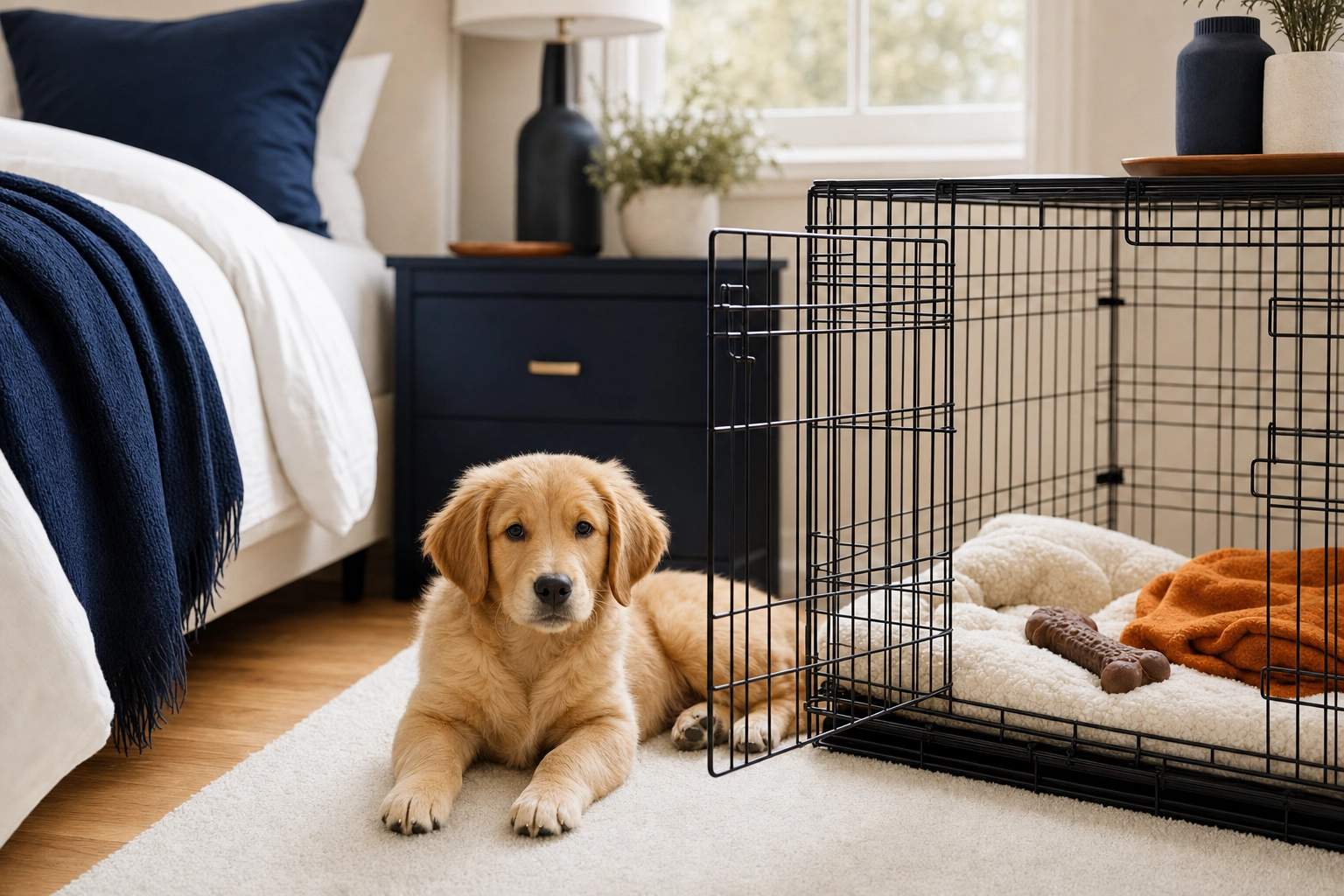
Many owners accidentally make crate whining worse because they are tired, stressed, and trying to do the right thing. That is understandable. Puppies are adorable, but they are also tiny chaos consultants.
The first mistake is using the crate only when you leave. This teaches your puppy that crate equals separation. Add happy crate moments while you are home so the crate does not always predict abandonment.
The second mistake is waiting until bedtime to train the crate. Bedtime is the final exam, not the lesson. Practice short, easy crate sessions during the day.
The third mistake is releasing the puppy during active demand barking every time. If needs are met and your puppy is safe, wait for a tiny quiet pause before opening the door. That quiet pause is the behavior you want to grow.
The fourth mistake is ignoring true distress. A panicked puppy is not being stubborn. They are overwhelmed. Support the puppy, lower the difficulty, and rebuild.
What to Do If Your Puppy Already Hates the Crate
If your puppy already screams when they see the crate, pause forced crate time when possible and rebuild the association. Keep the door open. Toss treats near the crate. Feed meals nearby. Let the puppy investigate without pressure.
Then shape tiny wins. Reward looking at the crate. Reward stepping toward it. Reward one paw inside. This may feel slow, but slow is fast when the alternative is a nightly opera titled “I Have Been Betrayed.”
If you must use confinement for safety, consider a puppy pen connected to the crate while you retrain. The goal is management without adding more fear.
When to Get Professional Help
Get help if your puppy panics in the crate, cannot settle even after needs are met, injures themselves trying to escape, or your sleep has been replaced by a cold brew dependency and quiet sobbing.
A trainer can help you identify whether the issue is normal puppy adjustment, crate-training gaps, separation distress, or schedule problems. The Virtual Dog Trainer offers online puppy training that can help you build a crate plan without waiting until your puppy has turned bedtime into a nightly hostage negotiation.
If you want help choosing the right next step, schedule support through The Virtual Dog Trainer or call 347-921-3376.
People Also Ask
Why is my puppy whining in the crate?
Your puppy may be whining in the crate because they need to potty, feel scared, want attention, are uncomfortable, or have not learned to relax in the crate yet. Start by ruling out potty and distress, then train short calm crate sessions.
Should I ignore puppy whining in the crate at night?
Do not ignore intense or escalating whining at night. If your puppy may need potty or sounds panicked, take a calm, boring potty break or reset the crate plan; if the whining is mild and needs are met, wait for a quiet pause before responding.
How do I stop my puppy from crying in the crate?
To stop your puppy from crying in the crate, make the crate comfortable, feed meals inside, practice short door-closed sessions, reward quiet, and use boring potty breaks at night. The key is gradual training, not simply waiting for the puppy to give up.
How long should I let my puppy cry in the crate?
Let your puppy cry only briefly if the sound is mild and not escalating. If your puppy becomes frantic, drools, scratches, screams, or may need potty, respond calmly and make the next crate session easier.
Is crate crying a sign of separation anxiety?
Crate crying can be normal puppy adjustment, but it can also be a sign of separation distress if your puppy panics whenever you leave. If the crying is severe, persistent, or paired with escape attempts, get professional help.
Can a dog trainer near me help with puppy whining in the crate?
Yes, a dog trainer near you can help with puppy crate whining, but online puppy training can work just as well for this issue because the trainer can coach your setup, schedule, and step-by-step crate practice at home.
What is the best puppy crate training near me for nighttime crying?
The best puppy crate training near you should teach calm crate associations, age-appropriate potty timing, nighttime routines, and separation-confidence skills. Avoid any approach that tells you to ignore panic without checking your puppy’s needs.
Who can help me stop my puppy crying in the crate near me?
The Virtual Dog Trainer can help you stop puppy crate crying through online puppy training, even if you are searching for help “near me.” You can get a personalized plan for your puppy’s schedule, crate setup, and nighttime routine by calling 347-921-3376.
Conclusion: Turn the Crate Into a Calm Place, Not a Crying Contest
Puppy whining in the crate is frustrating, but it is fixable. The answer is not to panic, quit, or let your puppy scream until everyone in the house looks like they slept in a wind tunnel.
Meet your puppy’s needs, train the crate in tiny steps, reward quiet, and use a schedule that makes sense for your puppy’s age. When the crate predicts safety and rest, the whining fades.
If you want a clear crate plan built around your puppy, your schedule, and your sanity, contact The Virtual Dog Trainer today. Call 347-921-3376 and let’s turn crate time from a nightly drama into peaceful sleep.
Take Control of Your Walks Today
Teaching a dog to heel is not about dominance or breaking their spirit; it is about safety, structure, and mutual respect. A dog that knows how to heel is a dog that gets to go more places, experience more things, and live a fuller life.
If you are struggling to get your dog to stop pulling, or if you are dealing with more severe issues like leash reactivity, you do not have to figure it out alone.
At The Virtual Dog Trainer, we specialize in helping owners build incredible relationships with their dogs through clear, balanced communication—all from the comfort of your own home.
Ready to stop being dragged down the street? Apply for our private online dog training program today, and let’s get to work.
Stop struggling and start enjoying your dog. Call us today or dial 347-921-3376 to get started on your training journey.