
Can Online Dog Training Help Multiple Dogs — Practical Tips

3 KEY TAKEAWAYS Online training fits multi-dog homes by letting you work in a low-distraction environment, replay sessions, and coach the whole family. Train each dog individually before bringing training them together. Have clear goals – walking both dogs together without pulling, have them run free off-leash or address specific behavior issues Can Online Dog […]
K9 Training Institute Review: What It Is, How It Works, and What It’s Missing

3 KEY TAKEAWAYS K9 Training Institute is a legitimate, well-structured program built around positive reinforcement and service dog body language methods — ideal for owners who want a self-paced introduction to dog psychology. K9TI falls short for owners dealing with serious behavioral issues like leash reactivity or aggression, as it does not incorporate balanced […]
Doggy Dan vs. The Virtual Dog Trainer: Which is Better?
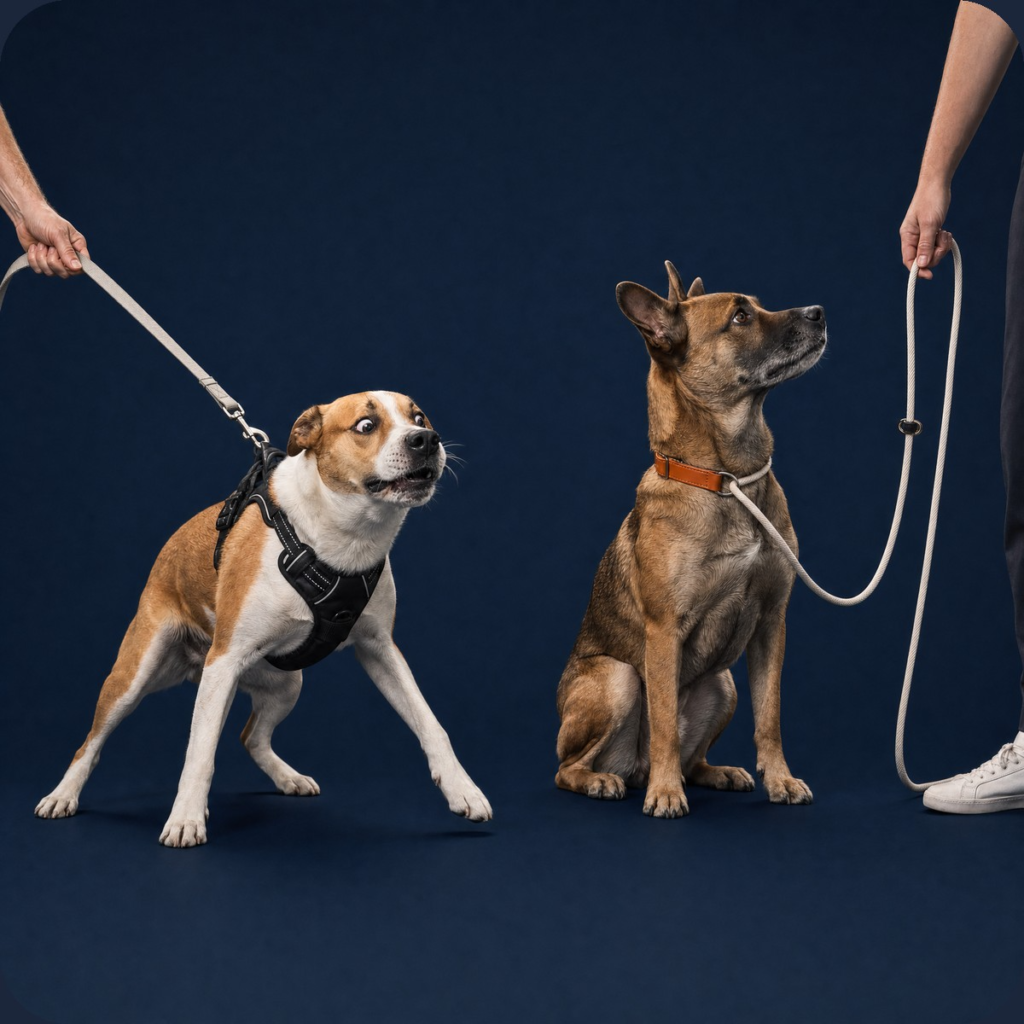
Key Takeaways: Doggy Dan offers a DIY library of pre-recorded videos based on “pack leader” theory, while The Virtual Dog Trainer provides live, 1-on-1 coaching. The Virtual Dog Trainer uses a balanced approach (rewards + fair corrections with proper tools), which is often more effective for severe reactivity than Doggy Dan’s methods. The […]
SpiritDog Training Review: What It Is, How It Works, & What It’s Missing

3 Key Takeaways Pre-recorded courses lack real-time feedback: While SpiritDog offers a massive library of videos, it cannot provide customized feedback on your specific leash handling or timing. Positive-only has limitations for reactivity: SpiritDog’s strict positive reinforcement approach can struggle with highly reactive dogs, whereas balanced training offers clearer communication. Live virtual training provides accountability: […]
How to Train Puppy to Walk on Leash: A Complete Guide

Key Takeaways Start leash training indoors with high-value treats to build positive associations before facing outdoor distractions. Use the “stop and go” method: if your puppy pulls, stop moving immediately and only proceed when the leash is loose. Reward your puppy for walking on a loose-leash or checking in with you How to Train Puppy […]
Separation Anxiety Dog Training: Fast Online Help

Key Takeaways Many dogs improve & overcome separation anxiety with structured, behavior modification, especially when training includes desensitization, counterconditioning, management, and owner coaching. Boredom is completely different then separation anxiety where boredom is usually an enrichment or supervision issue; separation anxiety involves distress like drooling, biting cage bars, when the dog is left alone. Veterinary […]
Puppy Whining in Crate? What to Do Tonight

Puppy whining in crate usually means your puppy needs help with potty timing, comfort, sleep, or gradual crate training. Do not let a scared puppy panic for hours. Instead, rule out urgent needs, keep nighttime boring, and teach the crate in small steps so it becomes a safe resting place rather than a tiny jail […]
How to Teach a Dog to Heel: The Ultimate Guide to Perfect Leash Manners

If you have ever been dragged down the street by a dog who thinks they are training for the Iditarod, you know the pain of a bad walk. Your shoulder aches, your neighbors are judging you, and your dog is choking themselves out just to sniff a discarded fast-food wrapper. It is not a walk; […]
The Ultimate Puppy Crate Training Schedule

If you are trying to figure out the perfect puppy crate training schedule, you are not alone. A successful puppy crate training schedule involves a strict rotation of potty breaks, playtime, and scheduled naps, typically alternating one hour of activity with two hours of crate rest. This structure prevents accidents, manages energy, and teaches your […]
Reactive Dog Training: How to Stop Barking, Lunging, and Leash Reactivity

What is reactive dog training? Reactive dog training focuses on reducing and stopping a dog’s overreactions to stimuli (like other dogs, strangers, or cars) caused by fear, frustration, aggression or excitement. Effective methods include identifying triggers, maintaining a safe distance (“under threshold”), using high-value treats for counter-conditioning, teaching alternative behaviors and potentially punishing the reactivity. […]